Table of Contents
- Why Buying Backlinks is a Trap (And What to Do Instead)
- How to Build Content That Practically Begs for Links
- How to Pitch Webmasters Without Sounding Like a Spammer
- The Sneaky (But Legal) Technical Link Building Playbook
- How to Schmooze Your Way to High-Authority Links
- The Broke Founder’s Toolkit for Finding Link Opportunities
- Frequently Asked Questions About Free Link Building
Key Takeaways
- Buying backlinks is a dangerous, short-term game that ultimately destroys your organic search visibility when Google’s algorithmic updates inevitably catch on.
- Earning high-quality links requires sweat equity through data-driven content, targeted outreach, and genuine relationship building.
- Technical link building tactics like broken link reclamation and reverse image search offer highly effective, free alternatives to paid placements.
- Nofollow and dofollow links both play critical roles in establishing a natural, authoritative backlink profile that withstands algorithmic scrutiny.
The digital underworld is overflowing with shady link vendors who slide into your inbox promising “high domain authority guest posts” for the low price of fifty bucks. Let us be entirely clear: these digital snake oil salesmen are peddling toxic waste that will eventually nuke your website’s organic visibility. The open secret of the search engine optimization industry is that the most powerful, needle-moving backlinks on the internet cannot be bought with a credit card. They are earned through a mix of psychological warfare, relentless sweat equity, and creating content that is so undeniably valuable that webmasters look foolish for not linking to it.
Paying for links is fundamentally a lazy strategy designed for website owners who lack the creativity or the drive to build genuine authority. When you whip out your wallet to secure a backlink, you are usually buying real estate on a massive link farm that exists solely to manipulate search engine rankings. Search engines are significantly smarter than the average spammer, and they have trained their algorithms to detect these unnatural financial transactions with terrifying accuracy. The alternative is to roll up your sleeves and leverage strategies that force high-authority publications, industry leaders, and authoritative directories to point their spotlight directly at your domain without asking for a dime in return.
Building an organic backlink profile is essentially constructing an impenetrable moat around your digital business. While your competitors are hemorrhaging cash to stay afloat on private blog networks, you can deploy a ruthless, actionable blueprint to extract links from the highest tiers of the internet. This requires shifting your mindset from a transactional buyer to a strategic digital public relations expert. By leveraging your unique expertise, proprietary data, and technical savvy, you can accumulate a backlink profile that not only drives massive targeted traffic but permanently bulletproofs your website against future algorithmic updates.
Why Buying Backlinks is a Trap (And What to Do Instead)
The hidden dangers of paid link schemes
Google has made its stance exceptionally clear in its official spam policies: buying, selling, or exchanging links to manipulate rankings is a direct violation that warrants severe penalization. When you engage in paid link schemes, you are essentially gambling the entire future of your business on the hope that a trillion-dollar technology company will not notice your unnatural footprint. Algorithmic enforcers like Google’s SpamBrain are specifically designed to analyze the entire web graph, identifying the obvious footprints left behind by paid link networks, sponsored post hubs, and shady digital PR agencies.
The immediate gratification of a purchased link is quickly overshadowed by the looming threat of a manual action penalty or an algorithmic demotion. Once your domain is flagged for manipulative link building, climbing out of that penalty box can take months or even years of painstaking disavow files and content rehabilitation. The financial loss is twofold: you lose the money you spent on the toxic links, and you lose the immense revenue generated by your previously stable organic search traffic. It is a catastrophic scenario that ruins businesses overnight.
Furthermore, paid links inherently lack the contextual relevance and behavioral signals that true, organic links possess. A purchased link on a generic lifestyle blog does not send qualified traffic to your site, nor does it establish you as an authority in your specific niche. It exists in a vacuum, completely disconnected from the actual conversations happening in your industry. Search engines measure the value of a link not just by the domain it comes from, but by the likelihood that a real human being would actually click it. Paid placements almost never satisfy this critical user engagement metric.
Decoding what Google actually considers a high-quality link
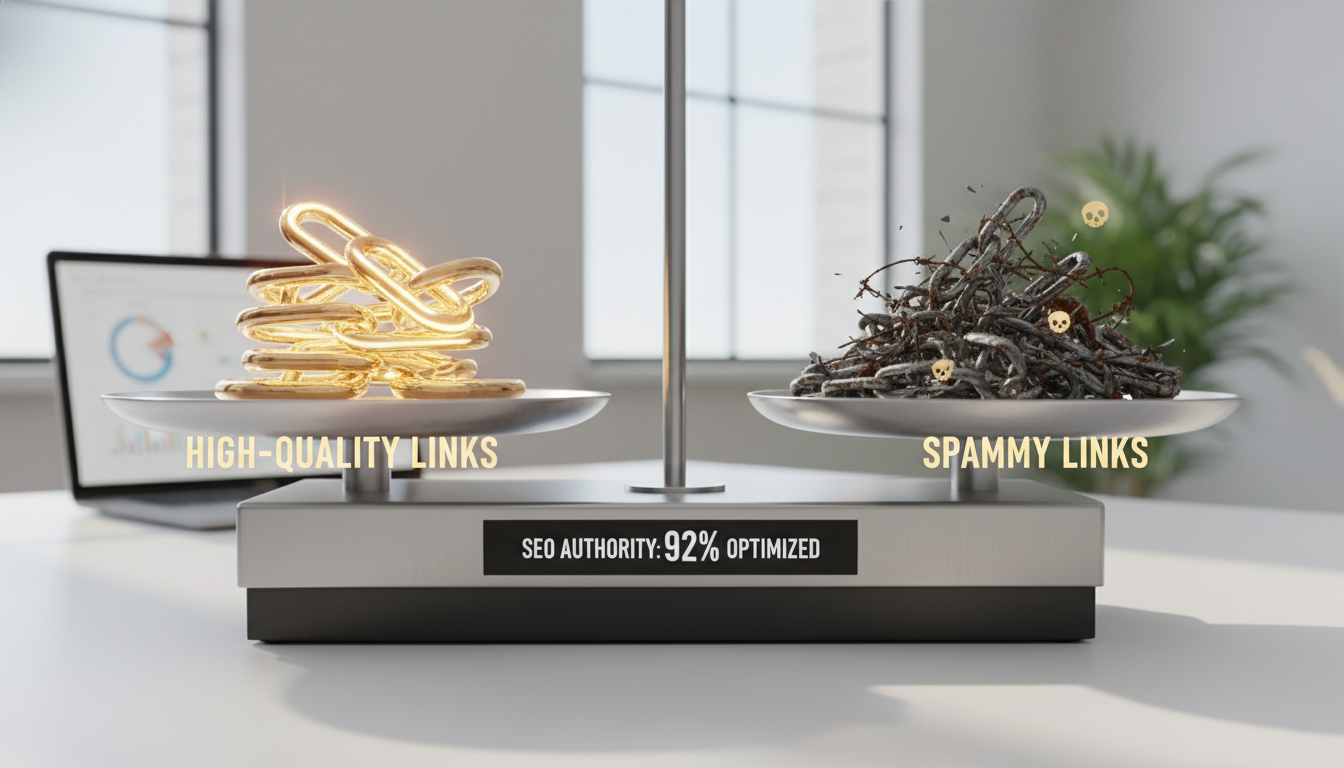
To understand how to earn links, you must first decode what search engines actually value. A truly high-quality link sits at the intersection of niche relevance, domain authority, and natural editorial placement. Relevance is the ultimate trump card; a backlink from a highly specific, moderately sized blog in your exact industry carries significantly more weight than a random placement on a massive, generic news aggregator. The context surrounding the link, the anchor text used, and the thematic alignment between the two websites tell search engines exactly what your page is about.
Domain authority, while often measured by third-party metrics, is fundamentally about the trust and historical credibility of the referring website. When an established, heavily trafficked entity vouches for your content by linking to it, they are passing a portion of their hard-earned trust signals over to your domain. This is why a single link from an esteemed industry journal or a recognized academic institution can drastically outperform hundreds of automated directory submissions. Quality will eternally conquer quantity in the modern search landscape.
Natural editorial placement is the final, crucial component of a high-quality backlink. This means the link was placed by an editor or writer because it genuinely enhanced the value of their article, not because it was shoehorned into an author bio or stuffed into a hidden footer. These links exist within the main body of the content, surrounded by relevant semantic phrasing. To consistently earn these placements, your content must serve as the definitive answer, resource, or citation for the topic at hand.
Why sweat equity beats financial investment in SEO
Investing sweat equity into your organic growth yields a compounding return on investment that financial shortcuts simply cannot match. When you dedicate time to effective white hat link building strategies, you are building permanent digital assets. A highly researched, uniquely valuable piece of content will continue to attract natural backlinks for years after it is published, creating a snowball effect of authority and traffic. You pay for the effort once, but you reap the SEO dividends indefinitely.
Moreover, the process of earning links organically forces you to forge genuine relationships with other creators, journalists, and thought leaders in your space. When you pitch someone a truly incredible piece of proprietary research, you are opening a dialogue that can lead to podcast appearances, co-marketing partnerships, and future collaborative opportunities. Transactional link buying completely bypasses this networking aspect, leaving you isolated on an island of purchased authority that could evaporate at any moment.
Sweat equity also naturally produces a highly diverse and robust backlink profile. By engaging in digital PR, forum participation, podcasting, and technical outreach, your incoming links will feature varying anchor texts, a healthy mix of dofollow and nofollow tags, and placements across diverse domain types. This organic chaos is exactly what search engine algorithms are looking for to verify that your site’s popularity is entirely legitimate.
How to Build Content That Practically Begs for Links
Engineering data-driven studies your competitors will cite
If you want to command links from the absolute top-tier publications in your industry, you need to stop writing regurgitated opinion pieces and start acting like a primary research firm. Journalists, bloggers, and even your direct competitors are constantly desperate for hard data to back up their claims. By engineering unique, data-driven studies, you position yourself as the definitive source. When someone needs a statistic about your niche, your website becomes the mandatory citation, naturally generating a steady stream of highly authoritative backlinks.
You do not need a massive budget to generate proprietary data. Small businesses can leverage their internal customer data, run highly targeted email surveys, or scrape publicly available information to uncover trends that nobody else is talking about. The goal is to find a controversial or heavily debated topic within your industry and provide the statistical truth. Once you compile this data, format it into a comprehensive report with clear takeaways, stunning visual representations, and easily quotable statistics.
The beauty of original research is its undeniable linkability. Even if a competitor despises you, they will still link to your study if it provides the exact metric they need to prove a point in their own content. To maximize the reach of your data, craft a compelling narrative around the numbers. Do not just publish raw spreadsheets; tell the story of what the data means for the future of your industry. This approach turns dry statistics into highly engaging, viral content that practically begs to be shared and referenced across the web.
Designing visual assets that steal the spotlight
Humans are intensely visual creatures, and the internet heavily rewards content that caters to this biological preference. Complex data, tedious processes, and dense industry jargon can be instantly simplified through the creation of high-quality infographics, flowcharts, and diagrams. Visual assets steal the spotlight because they are infinitely easier to consume and share than massive blocks of text. When you create a truly exceptional graphic, other content creators will instinctively want to embed it on their own websites to enhance their readers’ experience.
The key to leveraging visual assets for link building is strictly enforcing attribution. You want your graphics to spread like wildfire across social media and industry blogs, but you must ensure that every time your image is used, a backlink points back to the original source on your domain. This requires embedding your logo and URL subtly into the graphic itself, and providing an easy “copy-and-paste” embed code directly below the image on your site. This simple addition removes the friction for other webmasters, making it incredibly simple for them to use your visual and credit you properly.
Beyond traditional infographics, consider developing interactive visual tools or calculators if your budget allows. If you operate in a technical niche, a simple, visually appealing tool that solves an immediate mathematical or strategic problem will attract links purely through utility. People naturally bookmark and link to tools that make their lives easier. By focusing on visual utility, you transform your website from a passive blog into an active resource hub.
Writing evergreen resources that solve expensive problems
One of the most potent weapons in mastering SEO content marketing strategies is the creation of massive, comprehensive, evergreen guides. We are not talking about standard five-hundred-word blog posts; we are talking about definitive, bookmark-worthy masterclasses that solve expensive, painful problems for your target audience. When a resource is so deeply researched and exhaustively detailed that it leaves no stone unturned, other writers will naturally link to it instead of trying to recreate the wheel themselves.
Evergreen resources earn links because they remain relevant and valuable for years, unlike news-jacking content that expires within a week. To write content that commands this level of respect, you must identify the massive knowledge gaps in your industry. What is the one complicated process that everyone struggles with, but nobody has adequately explained? Attack that topic with relentless depth. Use expert interviews, case studies, step-by-step tutorials, and actionable templates to build the ultimate guide.
The psychological trigger here is reciprocity. When you give away your absolute best, most expensive advice entirely for free, the community feels naturally compelled to reward you. Webmasters assembling “best of” resource lists or creating introductory guides for their own audiences will lean on your comprehensive piece as the ultimate further reading suggestion. This strategy guarantees a slow, steady trickle of exceptionally high-quality editorial links month after month.
How to Pitch Webmasters Without Sounding Like a Spammer
Mastering the art of the personalized guest post pitch
The vast majority of outreach emails are immediately sent to the trash folder because they read like they were written by a malfunctioning robot. To secure guest posting opportunities on highly authoritative sites, you must master the art of radical personalization. The spray-and-pray method of emailing a thousand webmasters with a generic template is dead. Instead, you need to curate a highly targeted list of respected industry blogs and craft pitches that prove you have actually consumed and appreciated their existing content.
Your pitch should never begin with asking for a favor. It must begin by providing immense, undeniable value. Pitch specific, highly researched topics that perfectly bridge a gap in their current content library. Show them that you understand their audience demographics and their unique editorial tone. Mention a recent article they published, highlight what you loved about it, and explicitly state how your proposed guest post will naturally complement their existing work. The goal is to make the editor’s job as easy as possible.
Furthermore, you must establish your own credibility within the first few sentences of the email. Editors of major publications are protecting their audience from low-quality contributors. Briefly highlight your real-world expertise, link to your best pieces of published work, and explain why you are uniquely qualified to write on the proposed topic. When you approach guest posting as a genuine collaboration rather than a transactional link grab, your success rate will skyrocket.
Hijacking the news cycle with HARO and expert quotes
Journalists are under immense pressure to produce heavily sourced articles on extremely tight deadlines. They are constantly hunting for qualified experts to provide credible quotes, and platforms like Help A Reporter Out (HARO), Qwoted, and Connectively exist specifically to bridge this gap. By positioning yourself as a reliable, highly responsive expert on these platforms, you can effectively hijack the news cycle and secure backlinks from some of the most authoritative media conglomerates on the planet.
Winning expert quotes requires speed and conciseness. Journalists do not have the time to read a three-page manifesto about your brand philosophy. When you see a relevant query, respond immediately with a punchy, insightful, and slightly controversial quote that they can copy and paste directly into their article. Provide your name, your title, and a link to your website right alongside the quote. You must package your expertise so perfectly that it requires zero editing on their part.
Consistency is the true secret to this strategy. You will likely send out dozens of pitches before landing your first massive media mention. However, once a journalist uses your quote, you become a trusted source in their rolodex. They will often return to you directly for future articles, bypassing the crowded platforms entirely. This turns a one-off outreach effort into a recurring pipeline of high-tier media backlinks that your competitors cannot easily replicate.

Turning casual brand mentions into hard dofollow links
Every day, people are likely discussing your brand, your products, or your proprietary research online without actually linking back to your website. These unlinked brand mentions are the lowest-hanging fruit in the entire link building universe. The website owner already knows who you are, they already like you enough to mention you in their content, and they have already done the hardest part of the work. All you need to do is gently nudge them to turn that plain text into a powerful dofollow link.
To execute this strategy, you need to set up automated alerts using tools like Google Alerts or mention-tracking software to monitor the web for your specific brand name or unique product titles. When you discover an unlinked mention, you reach out to the author or webmaster with a polite, appreciative email. Thank them profusely for the shoutout, express your gratitude that they found your work valuable, and casually suggest that adding a link would drastically improve the user experience for their readers who might want to learn more.
Frame the request entirely around the benefit to their audience, not your SEO goals. Explain that a hyperlink provides a seamless pathway for their readers to access additional context. Because the relationship is already warm, the conversion rate on these outreach emails is exceptionally high. It is a brilliant, zero-cost method to capture the SEO value you have already rightfully earned through your broader marketing efforts.
The Sneaky (But Legal) Technical Link Building Playbook
Exploiting broken links on massive industry websites
The internet is essentially a massive, slowly decaying library. Over time, websites shut down, companies rebrand, and URLs change, resulting in millions of broken links scattered across highly authoritative pages. Broken link building is a technical strategy where you identify these dead links on relevant industry websites and offer your own superior, functioning content as the perfect replacement. You are essentially doing free technical janitorial work for the webmaster in exchange for a powerful backlink.
To find these opportunities, you can use SEO crawlers or browser extensions to scan resource pages, heavily linked articles, and industry directories within your niche. When you locate a broken link that used to point to a piece of content similar to yours, you have found your opening. You reach out to the site owner, politely inform them that they have a broken link negatively impacting their site’s user experience, and seamlessly offer your URL as a logical, immediate fix.
This tactic works brilliantly because it leads with undeniable value. Instead of begging for a placement, you are alerting the webmaster to a technical flaw on their site and handing them the exact solution on a silver platter. It triggers the psychological principle of reciprocity while simultaneously fixing the broken architecture of the web. It is a tedious, highly technical process, but the caliber of links you can extract from massive industry hubs makes the effort incredibly worthwhile.
Reverse-engineering competitor backlinks for easy wins
Why spend weeks brainstorming potential link targets when your most successful competitors have already mapped out the entire battlefield? By utilizing competitive intelligence tools, you can reverse-engineer your competitors’ backlink profiles and ethically steal their most valuable traffic sources. If a high-authority website is willing to link to your competitor, there is a very high probability they will be willing to link to you, provided your content is demonstrably superior.
This strategy ties deeply into unlocking your website’s potential with entity SEO strategies. You must analyze the exact pages linking to your competitors and identify the content gaps. Did the referring site link to an outdated statistic? Did they link to a guide that lacks modern visual assets? Once you identify the weakness in the competitor’s content, you create an asset that fundamentally destroys it in terms of depth, quality, and utility.
Armed with your superior content, you launch a targeted outreach campaign to every single website linking to the inferior competitor page. You politely point out that while they are linking to a decent resource, you have recently published a significantly more comprehensive and updated guide on the exact same topic. You are offering them an opportunity to upgrade their outgoing links, resulting in a dual victory: you gain a high-quality link, and you systematically strip link equity away from your direct competition.
Claiming high-authority directory spots without looking spammy
The word “directory” often triggers an immediate fight-or-flight response in veteran SEO professionals, evoking traumatic memories of automated spam tools and toxic link farms. However, completely abandoning directory link building is a massive mistake. While generalized, low-quality directories are absolute garbage, highly curated, niche-specific industry directories and localized business citations are fundamental building blocks for a trustworthy organic presence.
The secret is aggressive curation. You must stick exclusively to directories that boast strict editorial guidelines, require manual approval, and are frequently visited by actual human beings looking for services in your industry. Associations, local chambers of commerce, and heavily moderated professional networks provide massive trust signals to search engines. These are foundational links that legitimize your business entity in the eyes of the algorithm.
Avoid any service that promises “one thousand directory submissions for ten dollars.” Instead, manually seek out the top ten directories in your specific vertical and invest the time to fill out your profiles exhaustively. Add high-resolution images, detailed business descriptions, correct contact information, and ensure your branding is perfectly consistent. These high-authority directory spots might not skyrocket your rankings overnight, but they provide the stable, authoritative bedrock required to support your more aggressive link building campaigns.
How to Schmooze Your Way to High-Authority Links
Dropping truth bombs on Reddit and Quora
Community forums like Reddit and Quora are absolute goldmines for generating targeted referral traffic and establishing foundational links, but they are incredibly hostile to overt marketers. If you march into a niche subreddit and immediately start dropping links to your homepage, you will be aggressively banned by the moderators before you can even blink. Succeeding on these platforms requires schmoozing through raw, undeniable expertise and dropping truth bombs that genuinely help the community.
The strategy is to monitor these platforms for complex, highly specific questions related to your industry that remain unanswered or have been answered poorly. You must take the time to write a miniature masterclass directly within the forum post. Format it beautifully, use bullet points, share personal anecdotes, and provide so much upfront value that the community upvotes your response to the top of the thread. Only after you have provided massive value do you subtly weave in a link to your broader content as a “source for further reading.”
While many of these community links are tagged as nofollow, they still hold tremendous value. They drive highly qualified, high-intent referral traffic directly to your site, which leads to lower bounce rates and higher engagement signals. Furthermore, content researchers and journalists frequently scour Reddit and Quora for sources. By establishing yourself as the definitive voice of authority on these forums, you indirectly position yourself to earn powerful dofollow links from creators who discover your insights.
Leveraging podcast interviews for juicy homepage links
The podcasting industry has exploded, and it represents one of the most underutilized, high-converting link building strategies available today. Every time you appear as a guest on an industry podcast, the host will inevitably publish detailed show notes on their official website. These show notes almost universally include a juicy, highly authoritative dofollow link pointing directly to your homepage or a specific lead magnet. It is essentially a guaranteed backlink generated by having a pleasant conversation.
Pitching podcast hosts is significantly easier than pitching blog editors because hosts are desperate to fill their content calendars with engaging guests. To schmooze your way onto these shows, you need to craft a compelling founder story or present a unique, contrarian viewpoint on your industry. You must frame your pitch around how your specific insights will entertain and educate their unique audience, rather than focusing on promoting your own business.
Once you secure the interview, be an exceptionally gracious guest. Promote the episode heavily to your own audience, leave a glowing review for their show, and thank the host publicly. This goodwill often leads to the host introducing you to other podcasters in their network, creating a cascading effect of interviews and high-quality backlinks that requires zero technical SEO knowledge to execute.
Trading genuine product testimonials for powerful backlinks
Every small business utilizes a massive stack of software, tools, and services to operate on a daily basis. From your email marketing provider to your accounting software, you are surrounded by B2B companies that are absolutely starving for detailed, authentic customer testimonials. By offering glowing, specific reviews to these companies, you can easily secure powerful homepage or dedicated case study backlinks in exchange.
The companies you rely on want to prove to their prospects that real, successful businesses are using their tools. Reach out to the marketing directors of your favorite software platforms and offer to write a comprehensive testimonial detailing exactly how their product saved you time or generated revenue. Offer to provide a high-resolution headshot, your company logo, and a detailed quote. In return, simply request that they link back to your website alongside your testimonial.
This is a frictionless transaction. The software company receives a powerful marketing asset that helps them close more sales, and you receive a highly authoritative, relevant link from a trusted technology domain. Target the newer or mid-sized tools in your stack first, as their marketing teams are usually more accessible and eager to feature user success stories prominently on their highest-converting pages.

The Broke Founder’s Toolkit for Finding Link Opportunities
Squeezing every drop of value from free SEO trials
You do not need a massive enterprise SEO budget to analyze backlink profiles and hunt down technical opportunities. The industry’s premier tools, like Ahrefs and Semrush, offer highly capable free tiers, trial periods, and limited webmaster accounts that allow broke founders to execute enterprise-level strategies. By leveraging these free access points strategically, you can squeeze out enough actionable data to fuel months of outreach campaigns.
Start by verifying your domain through Ahrefs Webmaster Tools, which is entirely free and provides incredibly deep insights into your own backlink profile, anchor text distribution, and technical health. You can use this data to identify which of your existing pages are naturally attracting links, allowing you to double down on those successful content formats. Similarly, utilizing a temporary Semrush trial allows you to batch-export your top competitors’ backlink profiles into spreadsheets before the trial expires.
Do not overlook the sheer power of Google Search Console, the ultimate free tool for monitoring your organic growth. By closely analyzing the “Links” report within GSC, you can see exactly which domains Google recognizes as linking to you, allowing you to identify unlinked mentions or discover new directory opportunities. Combining the raw data from Google with the competitive intelligence extracted from premium tool trials gives you a lethal, zero-cost analysis workflow.
Hunting down elusive webmaster emails for zero dollars
The most beautifully crafted outreach pitch in the world is completely useless if it bounces from a generic “info@” inbox. To secure high-quality links, you must bypass the gatekeepers and drop your message directly into the personal inbox of the editor, journalist, or marketing director who actually has the power to update the website. Hunting down these elusive email addresses used to require serious investigative skills, but modern tools have democratized the process.
Platforms like Hunter.io offer generous free tiers that allow you to scrape domains for associated email addresses and verify their deliverability instantly. You simply plug in the target website, and the tool reveals the email naming conventions and direct contact information for the key decision-makers. This ensures your personalized guest post pitch actually reaches the human being capable of saying yes.
To increase your success rate further, cross-reference the names you find with LinkedIn profiles to ensure the person still holds the relevant position at the company. Sending an email to an editor who left the company three years ago is a quick way to get your domain flagged for spam. By investing an extra two minutes to verify the contact, you drastically improve your deliverability rates and ensure your sweat equity isn’t wasted on dead inboxes.
Using reverse image search to catch content thieves
If you have invested time and resources into creating beautiful custom graphics, original photography, or detailed infographics, it is a statistical certainty that someone on the internet has stolen them. Lazy content creators constantly right-click and save images from their competitors to use on their own blogs without providing any attribution. Rather than viewing this as frustrating copyright infringement, you should view it as one of the most effective, free link building opportunities available.
You can use Google’s native reverse image search functionality to hunt down these content thieves. Simply upload your proprietary graphics into the search bar, and Google will generate a list of every single website on the internet currently hosting your exact image. You will likely find dozens of blogs, news aggregators, and competitors using your hard work to enhance their own articles without your permission.
When you identify a culprit, do not send an aggressive legal threat. Instead, send a polite but firm email stating that you are the original creator of the image, and while you are thrilled they found it useful for their audience, you require proper attribution. Provide them with the exact HTML link code you want them to use to credit your website. The vast majority of webmasters will quickly add the backlink to avoid any potential copyright issues, instantly converting stolen property into a high-authority ranking signal.
Frequently Asked Questions About Free Link Building
Is link building actually illegal or just frowned upon?
Link building is not inherently illegal in a criminal sense; you will not be arrested for sending an outreach email or paying for a guest post. However, there is a massive difference between real-world legal boundaries and Google’s webmaster guidelines. Google operates a privately owned ecosystem, and they strictly dictate the rules of engagement within their search engine. Manipulative, black-hat link building—like buying links or participating in massive automated link networks—directly violates these guidelines.
When you cross the line from white-hat marketing into black-hat manipulation, you risk devastating algorithmic penalties that can effectively erase your business from the internet. Ethical link building, which involves creating genuinely valuable content and promoting it to relevant audiences, is completely safe and actually encouraged by search engines. The goal is to build relationships and earn citations naturally, rather than artificially inflating your perceived authority through deceptive financial transactions.
How long until these free backlinks actually boost my traffic?
One of the most difficult pills to swallow in SEO is the reality of time delays. Search engines do not operate in real-time when evaluating domain authority. When you successfully earn a high-quality backlink, it can take anywhere from several weeks to a few months for Google to crawl the referring page, process the link equity, pass that authority to your domain, and subsequently adjust your organic search rankings. Patience is not just a virtue in SEO; it is a mandatory requirement.
Furthermore, the impact of a single link is rarely explosive. Organic growth curves are typically flat for a long period before compounding suddenly. As you consistently earn high-quality links month after month, you slowly elevate the baseline authority of your entire domain. Setting realistic, grounded expectations prevents you from abandoning your sweat equity strategies right before the massive traffic breakthroughs occur.
What is the real difference between dofollow and nofollow links?
To understand link types, you must understand PageRank, the foundational algorithm that measures the importance of website pages. A “dofollow” link is a standard hyperlink that freely allows PageRank (link equity) to flow from the referring website to your website. These are the primary drivers of increased organic search rankings. A “nofollow” link contains a specific HTML attribute that historically instructed search engines not to pass any algorithmic authority through the link.
However, the landscape has evolved. Search engines now treat the nofollow attribute as a “hint” rather than an absolute directive. While dofollow links are still the holy grail of SEO, nofollow links from high-traffic sources—like social media profiles, major news publications, or community forums—still hold immense contextual value. They drive direct referral traffic, increase brand awareness, and create a highly diverse, natural-looking backlink profile that proves to search engines you are not manipulating the system. Both link types are absolutely essential for a healthy digital ecosystem.
Book a free consultation for your practice today.