Table of Contents
- Introduction
- The Brutal Truth About Search Snippets
- How to Write Title Tags That Demand Attention
- Meta Descriptions That Sell the Click Not the Product
- Jedi Mind Tricks for Higher Click-Through Rates
- Stop Guessing and Start Tracking Your Clicks
- Rookie Mistakes Killing Your Search Traffic
- Next-Level Tactics for Greedy Business Owners
- Frequently Asked Questions
Key Takeaways
- Meta descriptions do not directly impact your search rankings, but they drastically manipulate the click-through rate, which serves as the ultimate equalizer in search engine results.
- Writing titles that demand attention requires respecting pixel limits, front-loading high-value keywords, and injecting psychological triggers like numbers and brackets.
- Treating your meta tags like ad copy instead of a dry technical requirement will help you steal traffic from competitors who blindly rely on automated, boring corporate jargon.
- Systematically testing your search snippets using Google Search Console data allows you to identify bleeding pages and fix them before your traffic completely flatlines.
Introduction
Let us start with a brutally uncomfortable reality that most marketing agencies will never openly admit: Google does not owe you website traffic just because you bought an expensive domain and paid for premium hosting. You can spend thousands of dollars on brilliant copywriting, bleed over your keyboard to publish a ten-thousand-word magnum opus, and finally drag your webpage kicking and screaming to the first page of search results. But if your analytics dashboard is staring back at you with a fat zero in the organic traffic column, you are failing. Why? Because ranking is only half the battle. If your search snippet looks like a neglected Myspace profile from 2006, nobody is clicking on it, and your #3 ranking is effectively worthless.
This is where click-through rate comes into play, serving as the ultimate, unforgiving equalizer in the digital ecosystem. While your competitors are snoozing at the wheel, blindly publishing pages with auto-generated metadata that reads like a robot regurgitated a dictionary, you have an unparalleled opportunity to steal their traffic. Searchers are inherently lazy, impatient, and looking for an immediate solution to their highly specific problems. They are not going to click on a title tag that simply says “Home – Bob’s Plumbing.” They are going to click on the title that promises exactly what they need, delivered with confidence and clarity. When you optimize for clicks rather than just algorithmic appeasement, you bridge the massive gap between being seen and actually being visited.
We are going to abandon the boring, archaic SEO theory that has been paralyzing website owners for the last decade. Instead, we are diving deep into the actionable psychology and mathematical formulas that actually manipulate human behavior on search engine results pages. You will learn how to weaponize your titles, craft meta descriptions that sell the click like a seasoned copywriter, and stop leaving thousands of potential customers on the table. It is time to stop playing defense with your digital footprint and start demanding the attention your business deserves.

The Brutal Truth About Search Snippets
What exactly are we optimizing here?
Before we start performing digital wizardry, we need to strictly define the battlefield. When you perform a search on Google, the list of links you are presented with is populated by search snippets. A traditional snippet is composed of two primary elements that you have direct control over: the title tag and the meta description. The title tag is the large, usually blue, clickable headline that serves as the most prominent visual anchor for the user. The meta description is the block of smaller text directly underneath it, intended to provide a brief, compelling summary of what the user will find if they decide to click.
Think of these two elements as your digital storefront window. If your title tag is the glowing neon sign attempting to grab the attention of people walking down a busy street, your meta description is the meticulously arranged window display convincing them to actually walk through the front door. Sadly, the vast majority of small businesses treat these vital elements as an afterthought, relying on their content management systems to automatically pull the first random sentence from their page. This results in truncated, confusing, and ultimately useless snippets that fail to convey any real value or context to the prospective visitor.
Why your rankings mean nothing without clicks
There is a dangerous myth permeating the marketing world that achieving a page-one ranking is the ultimate finish line. It is not. Getting to the top of Google is nothing more than a vanity metric if nobody clicks the link. You could rank in the number one spot for a highly lucrative keyword, but if the website sitting in the number three spot has a beautifully optimized, psychologically irresistible search snippet, they will steal a disproportionate amount of your potential traffic. Understanding this dynamic is crucial, as why ignoring SEO will bankrupt your new website is largely tied to a failure to convert visibility into actual human engagement.
According to Search Engine Journal’s analysis of first-page clicks, the disparity in traffic between a poorly optimized snippet and a highly optimized one is staggering. Searchers process results in a fraction of a second, scanning for relevance and trust. If your title is boring and your description is cut off mid-sentence, you are sending a subconscious signal to the user that your website is equally neglected and unhelpful. Clicks are the currency of the internet; without them, your high rankings are just a trophy gathering dust in a locked room.
The harsh reality of direct ranking factors
Here is the controversial truth that many legacy SEO “gurus” refuse to accept: meta descriptions are not a direct ranking factor. Let that sink in. Google’s algorithm does not look at your meta description, spot a keyword, and automatically bump you up three positions in the SERPs. Google’s official documentation on search snippets explicitly states that meta descriptions do not influence their ranking algorithms directly. However, this absolutely does not mean they are unimportant. While they do not directly boost your rank, they profoundly impact your click-through rate, which heavily influences your overall organic performance.
When a large number of people begin clicking your link over the results placed above you, you are sending powerful user experience signals to the search engine. You are effectively telling the algorithm, “Hey, the users prefer my content to the other guys.” Over time, this high engagement can lead to better sustained visibility. Therefore, while jamming keywords into your description will not directly push you to position one, writing a description that commands a remarkably high CTR is one of the most vital indirect ranking strategies available to you today.
How to Write Title Tags That Demand Attention
Respecting the invisible 60-character boundary
Writing the perfect title tag is a delicate dance between creativity and strict mathematical limitations. Google limits the display of title tags based on pixel width, not an exact character count, but the universally accepted safe zone is roughly 50 to 60 characters. If you exceed this invisible boundary, Google will mercilessly truncate your carefully crafted headline, replacing the end of it with an ellipsis (…). There is nothing quite as embarrassing or trust-destroying as a medical clinic whose title tag accidentally cuts off to read: “We Specialize in the Best Care For Your Dying…”
To avoid this visual disaster, you must learn to write concisely. Every single word must earn its place in your title. Remove unnecessary stop words, eliminate redundant phrasing, and never waste precious real estate on generic welcoming statements. Tools like Ahrefs or simple SERP preview generators can help you visualize exactly how your title will appear on desktop and mobile devices before you hit publish. Mastering this spatial awareness is the first mandatory step in professional snippet optimization.
Front-loading your money keywords
Searchers scan pages using an “F-shaped” reading pattern, meaning their eyes gravitate heavily toward the left side of the screen. Because human attention spans on the internet are shorter than that of a goldfish, you have roughly milliseconds to prove that your page is relevant to their search query. This requires a tactic known as front-loading, where you place your most important, high-volume “money” keywords at the absolute beginning of your title tag.
For example, if you are a clinic trying to attract patients for back pain, “Welcome to Seattle Health Clinic’s Information on Back Pain Relief” is a catastrophic failure. By the time the user’s brain processes the actual topic at the end of the sentence, they have already scrolled past you. Instead, rewrite it as “Back Pain Relief Acupuncture | Seattle Health Clinic.” Immediate relevance is established on the first syllable. This signals to both the impatient searcher and the search engine crawlers exactly what the primary focus of the page is, drastically improving your chances of securing the click.
Injecting numbers, brands, and unique selling points
If you look at any standard search results page, you will notice a monotonous wall of identical text. Your goal is to disrupt this visual boredom. One of the easiest and most effective ways to command attention is by injecting digits into your titles. The human brain is naturally drawn to numbers because they represent order, specificity, and a clear promise of structured information. Changing “Ways to Improve Sleep” to “7 Proven Ways to Improve Sleep (2024)” creates an immediate psychological contrast that draws the eye.
Furthermore, utilize special characters like brackets or pipes to separate your core topic from your brand name or unique selling proposition (USP). Adding a phrase like “[Free Trial]” or “| 24/7 Support” at the end of your title gives the searcher a tangible reason to choose you over the competitor sitting right next to you. You are no longer just offering information; you are offering a distinctly packaged value proposition.
Meta Descriptions That Sell the Click Not the Product
Staying under the 160-character radar
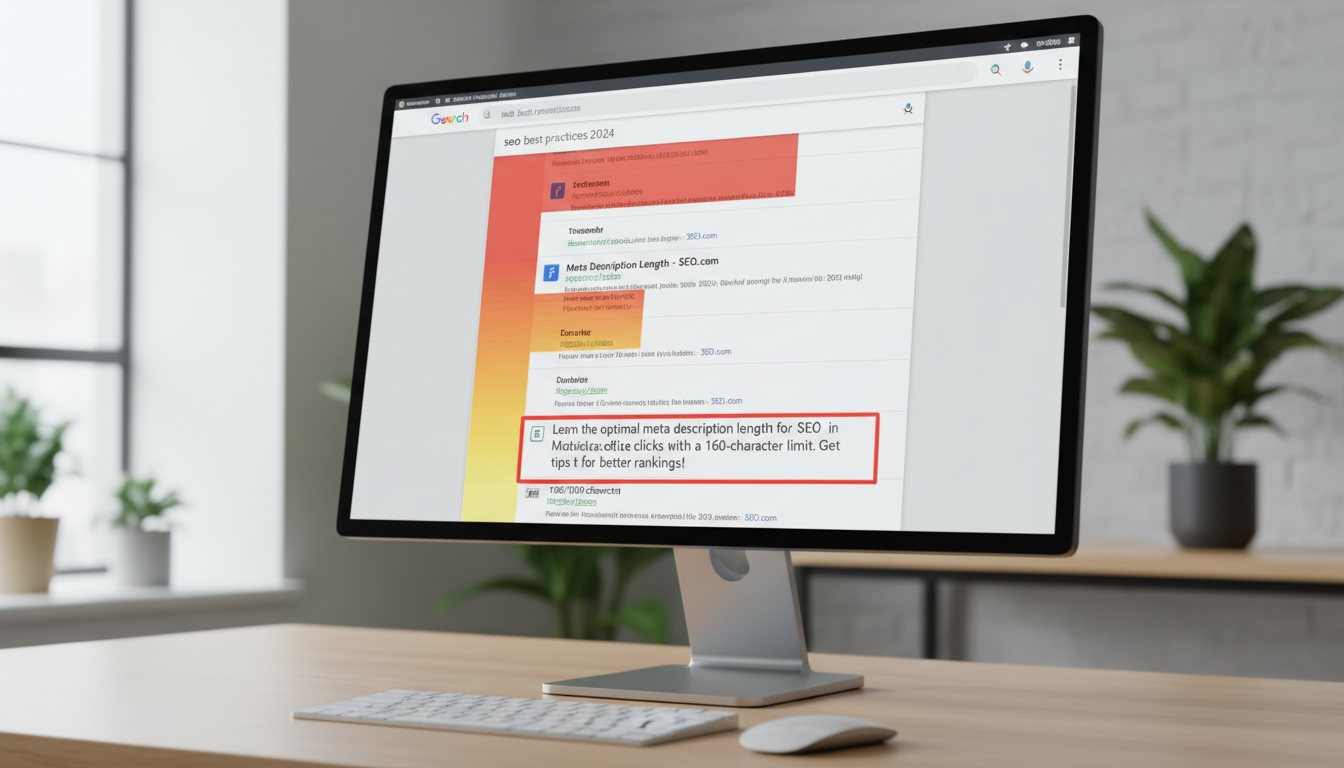
If the title tag is the headline of your advertisement, the meta description is the subheadline that seals the deal. Just like titles, descriptions are subject to truncation. To ensure your complete pitch is highly visible and visually intact, you must keep your meta descriptions under roughly 155 to 160 characters. Exceeding this limit results in a cutoff sentence that leaves the reader hanging and severely diminishes the professional appearance of your digital storefront.
However, staying under the limit does not mean writing a tiny, five-word sentence. You must maximize the available space. A description that is only 50 characters long wastes valuable real estate that could have been used to persuade the searcher. You need to treat this 160-character block as prime digital real estate. Craft a complete, punchy sentence that addresses the user’s pain point, offers a hint of the solution, and provides a compelling reason to engage immediately.
Writing calls to action that actually work
One of the most profound mistakes business owners make is assuming the user knows what to do next. You must explicitly tell them. A meta description without a Call to Action (CTA) is like a salesperson giving a brilliant presentation and then silently walking away without asking for the sale. You need to craft enticing CTAs that compel immediate action instead of encouraging passive reading.
Avoid generic, uninspired commands like “Click here” or “Read more.” These phrases are practically invisible to modern web users. Instead, use action-oriented verbs that align with the value of the page. Phrases like “Discover the secret to,” “Download your free guide today,” “Unlock our exact formula,” or “See our pricing plans” provide clear, exciting direction. The CTA should act as the logical, irresistible conclusion to the short story you just told in the first half of the description.
Teasing the solution without giving it away
There is a delicate balance to strike when summarizing your content. You want to prove that you have the answer the user is looking for, but you absolutely cannot give the entire answer away in the snippet itself. If a user searches for “What is the ideal temperature for a server room?” and your meta description reads, “The ideal temperature for a server room is 71 degrees Fahrenheit,” congratulations, you just solved their problem. And because you solved it in the SERP, they have zero reason to click your link.
This is known as the curiosity gap. You must tease the solution effectively. A better description would be: “Maintaining the correct server room temperature prevents catastrophic data loss. Discover the exact temperature range IT professionals recommend to keep hardware safe.” You have validated their concern, established authority, and withheld the specific data point they need, forcing them to cross the threshold onto your website to get the final piece of the puzzle.
Jedi Mind Tricks for Higher Click-Through Rates
Exploiting search intent and human psychology
To master click-through rate optimization, you must become an amateur psychologist. Every single search query is driven by a hidden desire, commonly referred to as search intent. Before you write a single word of metadata, you must decipher whether the searcher is looking for information (How do I fix a leaky pipe?), looking to navigate (Bob’s Plumbing login), or looking to transact (Hire emergency plumber near me). If your meta tags do not align perfectly with this underlying intent, your CTR will plummet.
If the intent is transactional, your snippet should scream speed, reliability, and value. Mention warranties, fast response times, and free quotes. If the intent is informational, your snippet must promise comprehensive, easy-to-understand education without a heavy sales pitch. When you match the psychological state of the searcher precisely, your snippet stops looking like an advertisement and starts looking like the exact lifeline they were hoping to find.
The proven formula for irresistible snippets
There is no need to reinvent the wheel every time you publish a new page. The highest-converting search snippets consistently follow a proven, three-part formula: Emotion + Specificity + Relevance. First, you trigger an emotion. This could be relief for someone in pain, excitement for someone looking to save money, or curiosity for someone trying to learn a secret. Emotion is the hook that arrests their scrolling thumb.
Next, you inject specificity. Vague promises are inherently untrustworthy. Instead of saying “We help you save money,” say “Cut your monthly server costs by 30%.” Finally, tie it all together with absolute relevance to their original search query. If you can seamlessly weave these three elements into a 160-character space, you can frequently boost your click-through rate by massive margins, stealing clicks from the monolithic brands sitting above you who are too lazy to write compelling copy.
Why boring is the enemy of profit
Corporate jargon is the silent killer of website traffic. Words like “synergy,” “innovative solutions,” and “paradigm shift” mean absolutely nothing to a stressed consumer looking for help. When you write boring, sanitized metadata, you blend into the digital background noise. You must ditch the generic, committee-approved language for highly specific, emotionally triggering copy that speaks directly to the reader like a human being.
Do not be afraid to be slightly controversial or incredibly bold, provided you can back it up. A title like “Why Your Current SEO Agency is Lying to You” will obliterate a title like “Standard SEO Consulting Services” in a head-to-head CTR battle. Your search snippet is a street fight for attention. If you walk into that arena wearing a beige suit and whispering politely, you are going to get ignored. Be loud, be precise, and be undeniably interesting.
Stop Guessing and Start Tracking Your Clicks
Mining Google Search Console for hidden gold
If you are blindly rewriting titles and hoping for the best, you are wasting your time. You already have access to the most powerful, accurate data in the world regarding your site’s performance, and it is completely free. Google Search Console is a goldmine for identifying which of your pages are bleeding traffic. By navigating to the Performance report, you can easily filter your data to show pages that have high impressions but abysmally low click-through rates.
These pages are your immediate low-hanging fruit. If a page is getting 10,000 impressions a month but only has a 0.5% CTR, it means Google thinks your content is highly relevant, but human beings think your snippet is garbage. By identifying these specific URLs, you can prioritize your optimization efforts. You don’t need to rewrite the metadata for thousands of pages; you just need to fix the ten pages that are currently hemorrhaging potential revenue.
The art of the meta tag A/B test
Optimization is not a “set it and forget it” endeavor; it is an iterative scientific process. Once you have identified an underperforming page, it is time to deploy systematic testing. Change the title tag and meta description, making sure to note the exact date you made the change. Wait two to four weeks for Google to recrawl the page and for sufficient data to accumulate. Then, compare the new CTR against the historical CTR.
Did the inclusion of a number increase clicks? Did changing the CTA from “Learn More” to “Get Your Free Guide” drive a spike in traffic? Tools like Semrush can help track these granular changes, but a simple spreadsheet works just as well. By constantly testing and refining, you move away from gut feelings and start making data-driven decisions that systematically scale your organic traffic over time.
Watching your bounce rate like a hawk
There is a dark side to CTR optimization, and it occurs when you write a brilliantly seductive snippet for a truly terrible webpage. When you promise the world in your meta description to secure the click, but the user arrives on your site to find thin, unhelpful, or completely unrelated content, they will immediately hit the back button. This is known as a bounce, and it is a massive red flag to search engines.
If your optimized snippet results in a skyrocketing bounce rate, your rankings will inevitably crash. Google’s ultimate goal is user satisfaction. If they see that everyone who clicks your link immediately flees back to the search results, they will conclude your site is deceptive. Therefore, as you optimize your tags, you must simultaneously ensure that your actual page content delivers flawlessly on the promises you made in the SERPs.

Rookie Mistakes Killing Your Search Traffic
The fatal flaw of keyword stuffing
In the early 2000s, SEO was a wild west where whoever crammed the most keywords into a meta tag won. Those days are dead and buried, but tragically, many small businesses are still operating under this archaic playbook. Keyword stuffing—writing a title like “Plumber Seattle | Seattle Plumber | Cheap Plumber in Seattle WA”—is not just ineffective; it is actively repelling your potential customers.
Writing for robots alienates human buyers instantly. When a user sees a keyword-stuffed snippet, it looks spammy, desperate, and unprofessional. Google’s natural language processing is incredibly advanced; it understands the context and synonyms of your topic perfectly well. Focus on writing one primary keyword naturally into the title, and let the rest of the snippet flow conversationally. Trust is the foundation of conversion, and spammy metadata destroys trust before the user even reaches your site.
Writing checks your content cannot cash
In the aggressive pursuit of higher click-through rates, it is dangerously easy to cross the line from compelling copywriting into deceptive clickbait. Never use bait-and-switch tactics. If your title promises “The Ultimate Free Guide to Acupuncture,” and the user clicks through only to find a hard paywall or a sparse 200-word blog post, you have irreparably damaged your brand’s reputation.
Clickbait works brilliantly on social media where engagement metrics are fleeting, but in search engine optimization, it is a death sentence. Searchers are seeking genuine solutions to their problems. When you deceive them, they not only bounce immediately, but they make a mental note to avoid your domain in the future. Always ensure that the hyperbole in your meta tags matches the actual quality and depth of the content sitting on the destination page.
The lazy trap of duplicate metadata
One of the most common and destructive errors found during technical site audits is the presence of widespread duplicate metadata. If you use the exact same title tag and meta description across fifty different pages of your website, you are essentially telling Google that all fifty pages are identical in purpose. This confuses the search engine, cannibalizes your own rankings, and provides a horrific user experience.
Every single URL on your website is a unique asset, and it deserves unique metadata that accurately reflects its specific content. Use crawling tools to scan your website and identify any instances of duplicate tags. While rewriting hundreds of descriptions sounds tedious, treating each page as an individual marketing opportunity is a non-negotiable requirement for anyone serious about dominating their industry’s search results.
Next-Level Tactics for Greedy Business Owners
Leveraging AI prompts for mass optimization
If you manage an e-commerce site with thousands of product pages, manually writing bespoke metadata for every URL is a logistical nightmare. This is where modern artificial intelligence becomes your greatest competitive advantage. By leveraging sophisticated AI tools, you can automate the generation of high-converting snippets at scale, provided you know how to engineer the prompts correctly.
Instead of asking an AI to “write a meta description,” feed it a strict persona, character limits, and your core USP. For example: “Act as an elite direct-response copywriter. Write a 150-character meta description for a product page selling organic dog food. Include the phrase ‘grain-free,’ use a compelling CTA, and end with a sense of urgency.” Understanding how to execute AI for SEO properly allows you to optimize massive websites in hours rather than months, maintaining high quality without the soul-crushing manual labor.
Adapting to AI Overviews and SERP changes
Search engine results pages are not static; they are highly dynamic environments that are constantly evolving. With the introduction of Google’s AI Overviews (formerly SGE) and rich snippets, the traditional ten blue links are frequently being pushed further down the page. To survive, greedy business owners must adapt their content marketing strategies to account for these visual changes.
Your meta descriptions now need to be punchier than ever, as they are competing with AI-generated summary boxes and visual product carousels. This means front-loading value is no longer just a best practice; it is a survival tactic. Keep a close eye on how the SERPs look for your specific industry keywords, and adjust your snippet strategy to ensure you remain visually dominant, regardless of how many new features Google introduces to the page.
Desktop versus mobile snippet strategies
We live in a mobile-first world, and your metadata strategy must reflect this reality. The character limits and visual presentation of search snippets differ significantly between desktop monitors and mobile smartphone screens. While desktop titles might give you 60 characters to play with, mobile screens often truncate titles slightly sooner depending on the pixel width of the specific device.
Conversely, Google sometimes displays slightly longer meta descriptions on mobile devices, or completely changes the layout to emphasize images alongside the text. Savvy business owners test their snippets across both environments. Ensure that the most critical, click-driving words in your title and description appear within the first 45 characters. This guarantees that whether your customer is sitting at a desk in a high-rise or hastily typing on their phone in a coffee shop, your core message is delivered intact.
Frequently Asked Questions
Do I really need to write a meta description for every page?
Strictly speaking, no. However, you absolutely must write custom meta descriptions for your high-value pages. This includes your homepage, core service pages, major product categories, and high-traffic blog posts. These are the pages that generate revenue, and leaving their CTR to chance is terrible business practice.
For low-priority URLs, such as your privacy policy, terms of service, or deep archive tags, it is perfectly acceptable to let Google auto-generate the snippet based on the on-page content. Your time and resources are finite; focus your copywriting energy on the URLs that actually have the potential to drive meaningful traffic and conversions to your business.
How long does it take for Google to update my tags?
When you hit save on your newly optimized meta tags, the changes do not instantly appear in Google’s search results. The search engine must first recrawl your specific URL and process the new information. In most cases, you can expect to see your updated title and description reflected in the SERPs within a few days to a couple of weeks.
If you are impatient, you can speed up this process slightly by logging into Google Search Console, pasting the specific URL into the inspection tool at the top, and manually clicking “Request Indexing.” This essentially nudges Google’s crawlers to prioritize checking your page, often resulting in your new snippets going live within 24 to 48 hours.
Why is Google rewriting my carefully crafted title tags?
It is incredibly frustrating to spend time crafting the perfect title tag, only to search for your keyword and see that Google has completely rewritten it on the live results page. Google does this when it believes your provided title tag is either irrelevant to the user’s specific query, overly stuffed with keywords, or generally unhelpful.
To prevent this algorithmic override, ensure your titles accurately reflect the core topic of the page and match the search intent of the user. If your title is clear, concise, and highly relevant to what the searcher is actually looking for, Google is far more likely to display your exact text rather than attempting to auto-generate a better version from your heading tags.
Book a free consultation for your practice today.