Mastering SEO Content Marketing Strategies: Your Comprehensive Guide
—
In the digital age, publishing content without a strategy is like setting sail without a compass. You might move, but you likely won’t reach your destination. SEO content marketing strategies represent the convergence of technical search engine optimization and creative content marketing. When executed correctly, this fusion not only drives organic traffic but builds authority and trust with your audience.
Whether you are a seasoned marketer or a business owner looking to scale, this guide will walk you through the essential pillars of a successful strategy.
1. Defining Your SEO Content Strategy Foundation
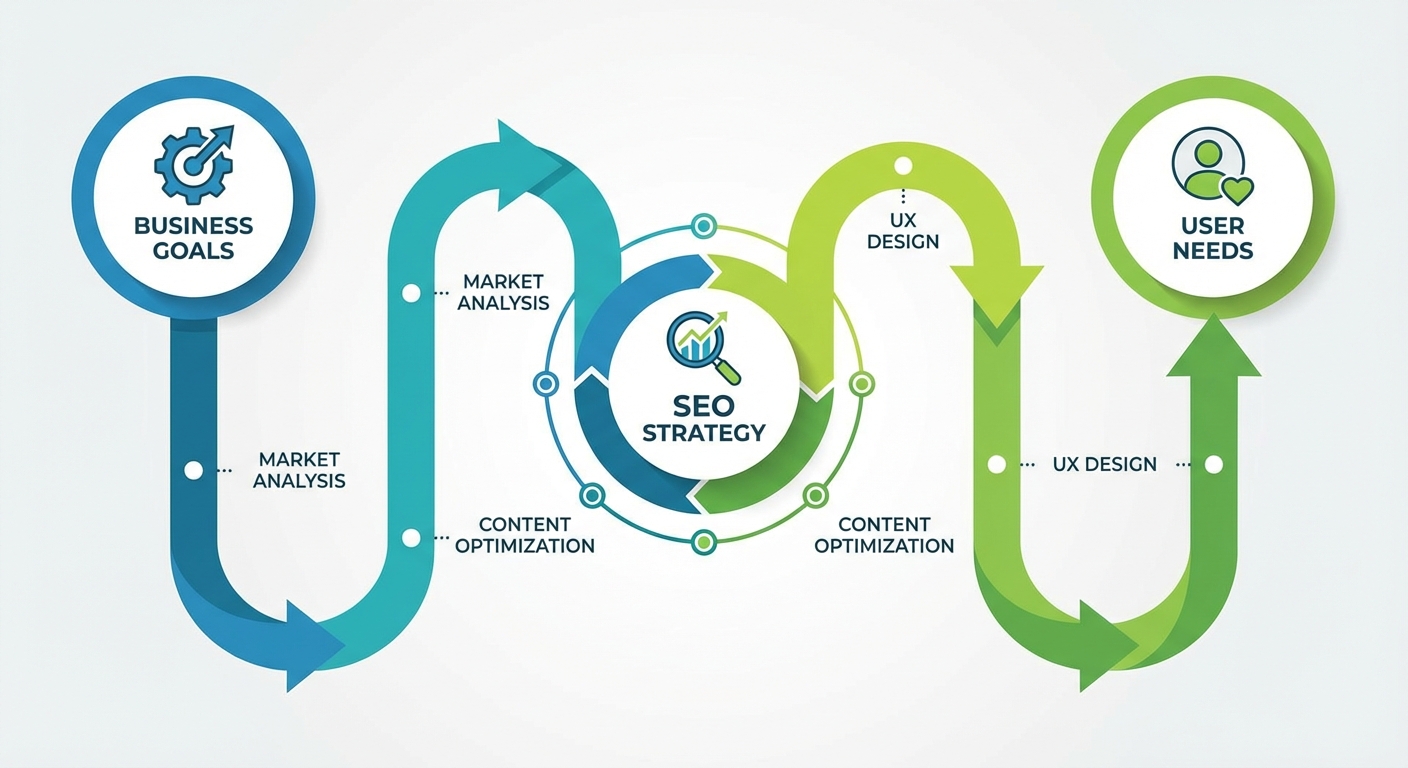
A robust SEO content marketing strategy begins with a clear understanding of your objectives and audience. Skipping this foundational work often leads to vanity metrics—high traffic with low conversion—or content that simply gets lost in the noise.
1.1. Setting Clear Goals and Objectives
Before typing a single word, you must define the “why.”
- Establish SMART Goals: Set specific, measurable goals for your SEO content marketing efforts. Are you aiming to increase organic traffic by 25% in Q3? Do you want to improve conversion rates on your service pages? Specificity breeds success.
- Align with Business Goals: Your content objectives must serve the broader business. Ensure every piece of content contributes to overall success, whether that’s brand awareness or direct sales.
- Define Success Metrics: Decide what success looks like for each initiative. For a top-of-funnel blog, success might be brand visibility; for a whitepaper, it’s lead generation.
1.2. Identifying Target Audience and Niche
- Audience Analysis: Conduct thorough analysis to understand demographics, psychographics, and online behavior. Tools like Google Analytics and social listening platforms are invaluable here.
- Segmentation: One size rarely fits all. Segment your audience to tailor strategies that resonate with different user groups (e.g., decision-makers vs. end-users).
- Buyer Personas: Develop detailed buyer personas. These fictional representations of your ideal customers guide content creation, ensuring your messages strike a chord with real human needs.
1.3. Understanding User Intent
Keywords tell you *what* people search for; intent tells you *why*.
- Deciphering Intent: Analyze search queries to categorize them: Informational (learning), Navigational (finding a specific site), Transactional (buying), or Commercial Investigation (comparing options).
- Mapping Content: Ensure your content provides the exact answers or solutions searchers are looking for based on these categories.
- Journey Mapping: Strategically craft content that satisfies user intent across various stages of the customer journey, from awareness to conversion.
—
2. Comprehensive Research for Content Planning
Prioritizing topics and keywords based on relevance and search volume is a fundamental component of any effective SEO content marketing strategy. Data should drive your editorial calendar, not just intuition.
2.1. Performing Smart Keyword Research
- Advanced Techniques: Utilize tools like SEMrush or Ahrefs to uncover high-value keywords. Look for the “sweet spot”: decent search volume with manageable competition.
- Long-Tail Focus: Don’t ignore long-tail keywords (e.g., “best seo strategies for small business” vs. “seo”). These indicate specific user intent and often offer higher conversion rates.
- Topic Clusters: Strategically group related keywords to build comprehensive content clusters. This signals to search engines that you are an authority on a broad topic.
2.2. Analyzing Competitors
- Identify Leaders: Look at the key competitors in your niche. Who is ranking for your target terms?
- Gap Analysis: Pinpoint content gaps—topics your competitors haven’t covered or haven’t covered *well*. This is your opportunity to offer unique value.
- Learn and Pivot: Analyze their successes and failures. If a competitor’s guide is outdated, create a fresher, more comprehensive version.
2.3. Audience Analysis and Segmentation
- Deepen Understanding: continually analyze questions and pain points. Forums like Reddit and Quora are goldmines for finding “real language” questions.
- Feedback Loops: Refine your content strategy by continuously monitoring audience feedback and engagement metrics. If a specific topic resonates, double down on it.
—
3. Developing High-Quality and Engaging Content
Content should be easy to follow, free of errors, naturally written, and valuable to the user. Google’s E-E-A-T (Experience, Expertise, Authoritativeness, and Trustworthiness) guidelines are critical here.
3.1. Content Mapping and Planning
- The Content Calendar: Create a detailed calendar mapping ideas to keywords, intent, and personas. This ensures consistency.
- Structural Outlining: Outline pieces with clear structures (H2s, H3s) and Calls to Action (CTAs) to guide both users and search engine crawlers.
- Format Selection: Strategically plan content types. A “how-to” might work best as a video, while industry data works best as an infographic.
3.2. Creating Valuable and Well-Written Content
- Originality is Key: Produce original, in-depth content that genuinely solves problems. Avoid “me-too” content that adds nothing new to the conversation.
- Natural Optimization: Ensure all content is factually accurate and incorporates keywords naturally. Avoid keyword stuffing; write for humans first, bots second.
- Brand Voice: Prioritize readability and engagement using clear language, compelling storytelling, and a consistent brand voice.
3.3. Incorporating Diverse Content Formats
- Diversify: Move beyond the blog. Include podcasts, case studies, and interactive tools.
- Repurposing: Turn a high-performing blog post into a YouTube video, a SlideShare, and a series of social media posts. This extends the lifespan of your research.
—
4. On-Page and Technical SEO Optimization
Even the best content will fail if search engines cannot find, crawl, or understand it. On-page optimization is the packaging; technical SEO is the delivery infrastructure.
4.1. On-Page Optimization Best Practices
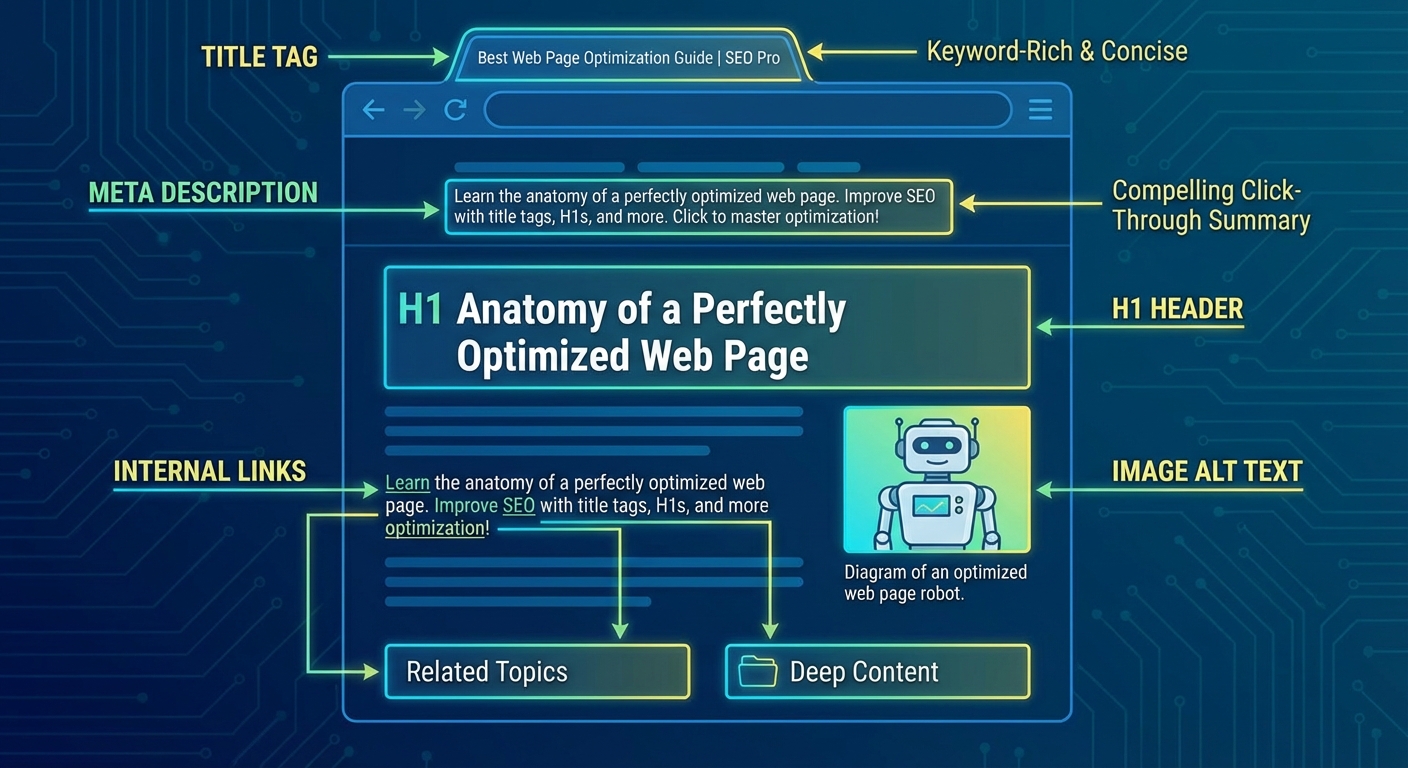
- Tag Optimization: Optimize title tags, meta descriptions, and header tags (H1, H2, H3). Your title tag is arguably the most important on-page SEO factor.
- Strategic Integration: Place keywords in the first 100 words, headers, and conclusion, focusing on relevance.
- Internal Linking: Build a web of links connecting related content. This passes “link juice” (authority) to new pages and keeps users on your site longer.
4.2. Fundamentals of Technical SEO
- Core Web Vitals: Address site speed and visual stability. A slow site increases bounce rates, which kills rankings.
- Crawlability: Implement XML sitemaps and robots.txt files to facilitate efficient crawling.
- Mobile-First: Ensure mobile-friendliness. Google uses mobile-first indexing, meaning it looks at your mobile site to determine rankings.
4.3. Content Structure and Readability
- Chunking Content: Break up long text with subheadings, bullet points, and short paragraphs. Huge walls of text scare away mobile readers.
- Visual Breaks: Utilize white space effectively and incorporate relevant images to enhance engagement.
- Formatting: Use bolding and *italics* to highlight key info, making the content scannable.
—
5. Off-Page SEO and Content Amplification
“Build it and they will come” does not apply to SEO. You must actively promote your content to build authority.
5.1. Strategic Link Building
- Quality over Quantity: Develop a plan to acquire high-quality backlinks from authoritative websites. One link from a high-DA (Domain Authority) site is worth 100 links from spammy sites.
- Link-Worthy Assets: Focus on creating data studies, original research, or free tools—assets that people naturally want to cite.
- Outreach: Utilize guest posting and broken link building (finding broken links on other sites and suggesting your content as a replacement).
5.2. Content Promotion and Distribution Channels
- Multi-Channel Approach: Push content via email newsletters, LinkedIn, Twitter, and niche communities.
- Paid Amplification: Don’t be afraid to use paid social ads to give a new piece of content initial momentum.
- Influencer Marketing: Partner with industry leaders to co-create or share content, borrowing their credibility.
5.3. Building Authority and Trust
- Consistency: Regularly publish expert-driven content to establish your brand as a trusted resource.
- Engagement: Encourage comments and reviews. User-Generated Content (UGC) signals to Google that your page is alive and relevant.
—
6. Measuring Performance and Iteration
Marketing without data is just guessing. Measurement and iteration are the pillars that sustain long-term growth.

6.1. Tracking Key Performance Indicators (KPIs)
- Essential Metrics: Monitor organic traffic, keyword rankings, bounce rate, time on page, and conversion rates.
- Dashboards: Set up Google Looker Studio or similar dashboards to visualize performance against your goals.
- Backlink Profile: regularly review your backlink profile to ensure you are gaining healthy links and not suffering from negative SEO attacks.
6.2. Analyzing Content Effectiveness
- Content Audits: Perform quarterly audits. Identify “zombie pages” (content with zero traffic) and decide whether to update, merge, or delete them.
- User Behavior: Use heatmaps (like Hotjar) to see where users click and how far they scroll.
- ROI Analysis: Evaluate which pieces of content are actually driving revenue, not just views.
6.3. Adapting Strategies Based on Data
- Trend Identification: Use data to spot emerging trends. If a certain keyword cluster is rising, produce more content around it.
- Agility: Be willing to pivot. If a Google Core Update shifts the landscape, adjust your content plan immediately.
—
7. Implementing an Effective SEO Content Workflow
7.1. Establishing a Content Creation Process
- Roles: Define who researches, who writes, who edits, and who publishes.
- Documentation: Document a standardized workflow (SOPs) to ensure quality never slips.
- Tools: Use project management tools like Asana, Trello, or Monday.com to track progress.
7.2. Integrating SEO into the Content Workflow
- SEO is Not an Afterthought: Embed SEO into the briefing stage. Writers should know the primary keyword and intent *before* they start writing.
- Training: Train content teams on basic SEO best practices.
- QA: Implement a final SEO check (using tools like Yoast or RankMath) before hitting publish.
7.3. Team Collaboration and Management
- Cross-Functional Work: Foster communication between SEOs, writers, and developers.
- Feedback Loops: Provide writers with feedback on how their content performed to help them improve.
- Scale: Use automation for repetitive tasks (like social scheduling) so your team can focus on creativity.
—
Frequently Asked Questions About SEO Content Marketing Strategies
How do I create a winning SEO content strategy?
A winning strategy involves setting clear goals, understanding user intent, conducting smart keyword research, creating high-quality E-E-A-T content, optimizing for on-page and technical SEO, and continuously measuring performance to iterate.
What are the essential components of an SEO content marketing strategy?
The essential components include audience analysis, keyword research, content planning, high-quality creation, on-page optimization, technical SEO health, off-page link building, and performance analytics.
What steps are involved in developing an effective SEO content plan?
1. Define goals and audience.
2. Perform keyword and competitor research.
3. Map content to user intent.
4. Create a content calendar.
5. Draft and optimize content.
6. Publish and promote.
7. Measure and update.
How do audience analysis and keyword research fit into SEO content strategies?
Audience analysis tells you who you are talking to, while keyword research tells you what they want. Together, they ensure your content is both relevant to the human reader and discoverable by the search engine.
How can I measure the success of my SEO content efforts?
Track KPIs such as organic traffic growth, keyword ranking improvements, engagement metrics (time on page), and most importantly, conversions (leads or sales) attributed to organic search.