The Future is Now: Unpacking Key Trends in SEO for 2026
Introduction
As we approach 2026, the SEO landscape is no longer just shifting—it is undergoing a total metamorphosis. The days of simple keyword matching and backlink counting have given way to a sophisticated ecosystem driven by deep learning, generative intelligence, and radically different user behaviors. To stay ahead, marketers must move beyond traditional tactics and embrace a world where search is conversational, ubiquitous, and deeply personal.
The accelerating pace of change is primarily fueled by the maturity of Large Language Models (LLMs) and the integration of AI directly into the core of search engines. By 2026, the foundational principles of search will have transformed from a “library index” model to an “intelligent assistant” model. This blog post explores the critical trends you need to master to survive and thrive in this new era.
—
The Dominance of AI in Search & SEO
AI’s influence is no longer a peripheral feature; it is the engine. By 2026, AI-driven search experiences will fundamentally alter how users discover information, moving from clicking blue links to receiving synthesized answers.
AI Overviews and AI Mode in SERPs
AI Overviews (formerly SGE) have become the default interface for the majority of informational queries. Instead of visiting three different websites to learn “how to set up a smart home hub,” users get a comprehensive, multi-modal summary directly on the Search Engine Results Page (SERP). The challenge for SEOs in 2026 is “Zero-Click Optimization”—learning how to become the cited source within these AI summaries to maintain brand authority even when direct traffic dips.
Impact of AI Chatbots and Virtual Agents
Search volume is increasingly leaking from Google and Bing toward dedicated AI agents like ChatGPT, Claude, and specialized virtual assistants. These agents act as direct information sources, bypassing the SERP entirely. To remain relevant, your content must be structured in a way that these agents can ingest, trust, and recommend during a live conversation.
AI Optimization (AIO) and LLM Visibility
A new discipline, AI Optimization (AIO), has emerged. This focuses on ensuring content is discoverable and accurately represented by LLMs. This involves:
– Clarity and Factuality: LLMs prioritize well-grounded facts over marketing fluff.
– Semantic Richness: Using schema markup and entity-based writing to help AI “understand” the context.
– Synthesis-Ready Content: Writing in a way that is easy for an AI to summarize without losing the core message.
Hybrid AI + Human Content Strategy
By 2026, the “AI vs. Human” debate has settled into a hybrid reality. Purely AI-generated content is now seen as a commodity with little ranking power. The winning strategy involves using AI for data processing, outlines, and initial drafts, while human experts provide the unique insights, emotional resonance, and E-E-A-T that machines cannot replicate.
—
E-E-A-T and Content Quality as Core Ranking Factors
In a world flooded with AI-generated text, Trust is the ultimate currency. E-E-A-T (Experience, Expertise, Authoritativeness, and Trustworthiness) has solidified its position as the paramount ranking factor.

E-E-A-T Becoming the Most Important Ranking Factor
Search algorithms now place massive weight on signals of genuine human experience. If you are writing about travel, the algorithm looks for proof that you were actually there. If you are writing about finance, it looks for verifiable credentials. In 2026, an anonymous blog post stands no chance against content backed by a transparent, proven author profile.
Focus on Content Quality and Intent Alignment
Generic, superficial content is a liability. 2026 SEO demands hyper-alignment with user intent. Content must not only answer the “what” but also the “why” and “how next.” Algorithms now use advanced behavioral analysis to see if your content actually solves the user’s problem or if they had to return to the AI agent for more help.
Evergreen Strategy and Refreshing Old Content
The “newness” factor is critical, but so is longevity. Regularly refreshing old content with new data, current trends, and updated perspectives is more effective than churning out low-quality new posts. Algorithms in 2026 reward the “living document” approach to content.
Importance of User-Generated Content (UGC)
UGC—reviews, forum discussions (like Reddit), and testimonials—serves as a powerful signal of E-E-A-T. Search engines see a community’s discussion about a product as more trustworthy than the product’s own description. Integrating authentic user voices into your site is no longer optional.
—
Evolving SERP Experience and Omnichannel Visibility
The traditional Google SERP is unrecognizable. It is now a dynamic, interactive canvas.
“Search Everywhere Optimization” and Omnichannel Search
Users are searching on TikTok, YouTube, Pinterest, and even within specialized retail apps. SEO in 2026 is about being present at every digital touchpoint. This means your video on TikTok needs to be optimized for search just as much as your blog post.
Optimizing for Google Discover and Video Marketing
Google Discover has become a primary traffic driver, utilizing a “query-less” search model based on user interests. Visual storytelling and video content are the keys to winning in Discover.
As seen in the evolving landscape, video content is no longer a secondary asset; it is often the primary way information is consumed and ranked.
—
Strategic Content Approaches: Topic Clusters & Semantic SEO
Modern SEO is about owning the “Entity,” not the “Keyword.”
Implementing Topic Clusters for Comprehensive Coverage
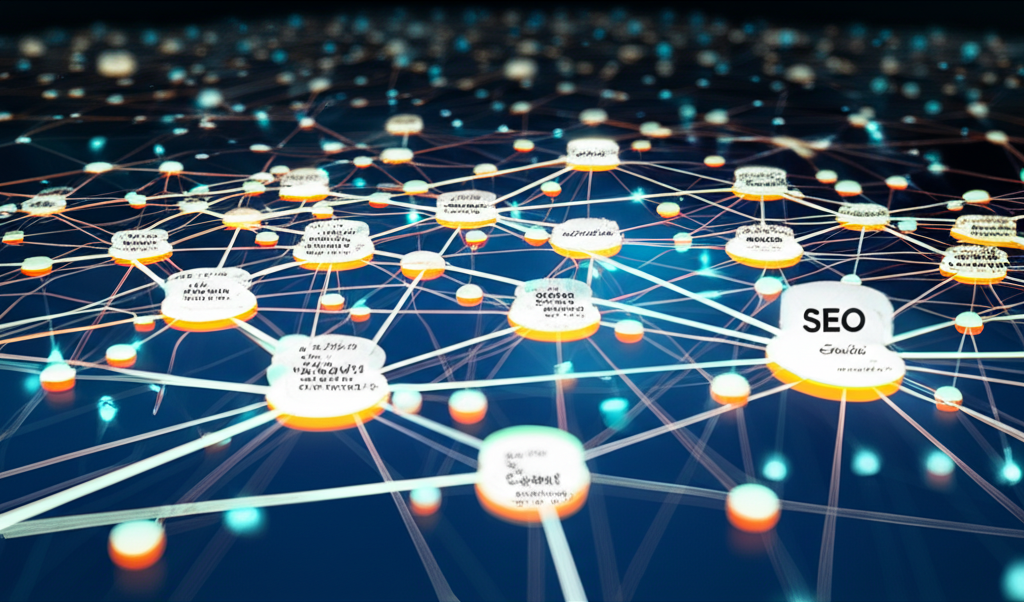
Instead of targeting individual keywords, 2026 SEOs build massive topic clusters. By creating a “pillar” page and dozens of interconnected “cluster” pages, you signal to search engines that you are an absolute authority on the subject. This topical authority is a shield against AI-generated competitors.
Leveraging Semantic SEO for Deeper Understanding
Semantic SEO focuses on the meaning and relationships between concepts. By using structured data and natural language that mimics how experts talk, you ensure that search engines (and AI models) see the depth of your knowledge.
—
The Resurgence of Technical SEO Fundamentals
Ironically, as search becomes more “human,” the technical foundation becomes more critical.
Technical Fixes as Biggest Wins
With AI crawlers and traditional bots both hitting your site, crawl budget management is vital. Ensuring your site architecture is clean and your internal linking is logical provides the “map” that AI needs to ingest your content efficiently. Many 2026 SEO wins come from simply fixing the “plumbing.”
Core Web Vitals and Site Performance
Site speed and stability are now baseline requirements. In 2026, a slow-loading site isn’t just a minor annoyance—it’s a disqualifier for high-value AI Overview citations.
—
Local SEO’s Surge and Branded Search Tactics
Local search is entering a “Generative Engine Optimization” (GEO) phase.
Growth of Local Search (GEO)
For local businesses, visibility in the “Local Pack” now involves optimizing for conversational queries like “Where is the best place to get a gluten-free pizza near me that is open now and has outdoor seating?” The precision of local data is higher than ever.
Rise of Branded Search Tactics and Sentiment
Search engines are prioritizing brands that people specifically ask for. If users are searching for “[Brand Name] reviews,” it signals authority. Furthermore, search engines now analyze the sentiment of your brand across the web. Negative sentiment on social media or review sites can directly suppress your organic rankings.
—
Challenges in Measuring SEO Success
In 2026, the “Organic Click” is no longer the only metric that matters. Measuring success has become significantly more complex.
Increased Difficulty in Measuring SEO Results
How do you measure the value of an AI Overview that shows your brand but doesn’t result in a click? New KPIs include:
– Share of Voice in AI Overviews
– Brand Mentions in LLM Responses
– Sentiment Score
– Assisted Conversions via Search
—
Adapting to a Fracturing Search Landscape
We are moving away from a Google-only world. The decline in traditional search volume is being offset by the rise of niche, AI-powered platforms.
Optimizing for AI Search Platforms
SEOs must now consider how to rank in Perplexity, You.com, and ChatGPT’s search features. This involves providing clear, structured data and ensuring your site is not blocking the specialized bots these platforms use.
—
Conclusion
The SEO of 2026 is a blend of high-tech optimization and old-school trust. While AI dominates the delivery of information, human expertise and brand authority remain the primary sources of value. Success in this era requires a commitment to technical excellence, a focus on E-E-A-T, and the agility to optimize for search across a multitude of platforms. The future is here—is your brand ready to be found?
—
Frequently Asked Questions (FAQ)
What are the top SEO trends for 2026?
The top trends include AI Optimization (AIO), a focus on E-E-A-T, omnichannel visibility, and the rise of conversational, zero-click searches within AI Overviews.
How will AI impact SEO in 2026?
AI will become the primary interface for search, leading to fewer traditional clicks for basic queries but higher quality traffic for complex queries that require deep expertise.
What is the role of E-E-A-T in 2026 SEO?
E-E-A-T is the most critical ranking factor. As AI content becomes ubiquitous, search engines prioritize content that proves real-world experience and human authority.
How will Google SERP change by 2026?
The SERP will be highly personalized and interactive, featuring prominent AI-generated summaries, video integration, and direct-action buttons that bypass traditional websites.
Will traditional search engine volume decrease due to AI?
Yes, traditional keyword search volume is expected to decline as users shift toward conversational AI agents and platform-specific searches (like TikTok or Amazon).