Table of Contents
- Introduction
- The Keyword Strategy Disasters Costing You Customers
- On-Page Optimization Blunders That Scream Amateur Hour
- Technical SEO Nightmares Scaring The Crawlers Away
- Toxic Backlink Profiles That Trigger Google Penalties
- Punishing Your Visitors With Horrible User Experience
- Leaving Local Money On The Table
- The Set It And Forget It Content Strategy Fallacy
- Flying Blind Without Analytics Or Monitoring
- Frequently Asked Questions About SEO Mistakes
Key Takeaways
- Chasing high-volume vanity keywords instead of search intent will bankrupt your conversion rates and flood your site with useless traffic.
- Technical SEO is not optional; slow load times and horrific mobile experiences actively bleed your existing rankings.
- Toxic backlinks and aggressively duplicated content trigger algorithmic penalties that can completely erase your website from search results.
- Modern SEO requires continuous monitoring and adaptation because algorithm updates instantly change the rules of digital visibility.
Introduction
Let us start with a brutal, unavoidable truth: Google does not care how much money you spent on your stunning website redesign. You can have the most aesthetically pleasing digital storefront in your industry, complete with high-definition drone footage and award-winning typography. However, if search engine crawlers cannot understand your architecture, or if your content fails to satisfy user intent, your expensive website is effectively a ghost town. It is a stunning billboard hidden in the middle of a dense, unpopulated forest. The harsh reality of modern digital marketing is that why ignoring SEO will bankrupt your new website is not just a sensationalist warning; it is a mathematical certainty.
We often treat Search Engine Optimization as a mystical sprinkle of digital fairy dust that we can blindly hand off to an intern or an automated plugin. This is a catastrophic miscalculation. SEO is a cutthroat, highly competitive arena where every single error is capitalized upon by your competitors. Avoiding prevalent SEO mistakes is often far more impactful than discovering some revolutionary new growth hack. You do not always need to reinvent the wheel to climb the rankings; sometimes, you just need to stop actively slashing your own tires with amateur optimization blunders.
This guide is going to serve as a comprehensive, slightly controversial, and entirely no-nonsense audit of your current organic strategy. We are going to expose the lazy tactics, the outdated advice, and the technical nightmares that are currently sabotaging your digital visibility. By understanding exactly what makes search algorithms demote your pages, you can systematically patch the holes in your strategy, appease the search engine gods, and finally start capturing the highly qualified, ready-to-buy traffic your business actually deserves.
The Keyword Strategy Disasters Costing You Customers
Chasing vanity metrics over searcher intent
One of the most pervasive traps in digital marketing is the obsession with vanity keywords. Business owners frequently fixate on broad, single-word queries with massive monthly search volumes, convincing themselves that ranking for these terms will instantly result in untold riches. For example, a local shoe retailer might obsess over ranking for the keyword “shoes.” The problem is that the Search Intent behind this broad query is hopelessly fragmented. The user might be looking for a Wikipedia article on the history of footwear, a massive brand like Nike, or pictures of high heels.
Instead of burning your marketing budget trying to conquer impossible, highly ambiguous terms, you must pivot toward long-tail keywords that clearly signal commercial intent. A query like “buy orthopedic running shoes for flat feet near me” might only have a fraction of the search volume, but the person typing that into Google already possesses their credit card in hand. When you target specificity over sheer volume, you inherently filter out the window shoppers. You are no longer competing against multinational conglomerates; you are competing locally for a highly qualified buyer.
This strategic shift fundamentally alters how search engines view your authority. When you satisfy specific search intent accurately, users stay on your page longer, they engage with your content, and they convert. Google’s machine learning algorithms monitor these user signals obsessively. By abandoning vanity metrics and focusing strictly on intent-driven keywords, you actively train the algorithm to view your site as the ultimate destination for specialized, high-converting queries within your specific niche.
Stuffing keywords like a 2005 spammer
There was a dark, lawless period in the early days of the internet where you could manipulate search engines simply by cramming your target keyword into a page three hundred times. You could even hide the text by making it the same color as the background. Fast forward to today, and relying on keyword stuffing is the absolute fastest way to get your website obliterated from search results. Modern search engines utilize incredibly sophisticated natural language processing capable of understanding context, semantics, and readability.
When you force keywords unnaturally into your sentences, you severely degrade the reading experience. Search algorithms are meticulously designed to simulate human reading patterns. If a bot detects that your text reads like it was generated by a malfunctioning robot desperately trying to say “affordable emergency plumber” in every sentence, it will actively demote your page. The algorithm penalizes content that prioritizes manipulation over genuine user education and readability.
Writing for humans must always take precedence over writing for algorithms. You should seamlessly incorporate your primary keywords into your natural prose, utilizing synonyms and conceptually related terms to build topical relevance. This approach, known as latent semantic indexing, signals deep expertise. It proves to the search engine that you are thoroughly discussing a topic with nuance and depth, rather than simply trying to artificially inflate your keyword density metrics.
Ignoring the customer’s buying journey
Keywords do not exist in a vacuum; they represent real human beings at very specific stages of the purchasing journey. A fatal mistake many content marketers make is targeting exclusively transactional keywords while entirely ignoring the awareness and consideration stages. If your entire website is nothing but “buy now” pages, you are alienating the vast majority of searchers who are simply trying to diagnose their problem or compare potential solutions.
Mapping your keywords to the buyer’s journey ensures that you capture users at every single touchpoint. In the awareness stage, your prospective customer is asking broad questions. They need educational blog posts and comprehensive guides. In the consideration stage, they are looking for comparison charts, case studies, and reviews. Finally, in the decision stage, they need product pages, pricing tables, and strong calls to action.
By strategically creating content for all three phases, you build a relationship with the consumer long before they are ready to swipe their card. You position your brand as a helpful, authoritative guide rather than a desperate salesperson. Search engines reward this comprehensive approach because it creates a closed-loop ecosystem where users can research, compare, and purchase without ever needing to return to the search results page.
On-Page Optimization Blunders That Scream Amateur Hour
Wasting your title tags and meta descriptions
Think of your title tags and meta descriptions as the digital equivalent of a massive billboard on a busy highway. It is the absolute first impression a potential visitor gets of your brand amidst a sea of fierce competitors. Shockingly, countless websites leave these critical elements completely blank, allow their CMS to auto-generate them, or duplicate the exact same generic tag across every single page on their domain.
When you neglect your metadata, you surrender control of your messaging to the search engine, which will arbitrarily pull random snippets of text from your page. This often results in confusing, truncated, or utterly irrelevant descriptions that severely depress your organic click-through rate. A page ranking in the third position with a highly compelling, psychologically driven title tag can frequently steal traffic away from the page sitting in the number one spot.

You must meticulously craft unique, action-oriented title tags and meta descriptions for every crucial page on your website. Use emotional triggers, clearly state the value proposition, and ensure your primary keyword is placed near the front of the title. Treat this metadata exactly like you would treat high-stakes advertising copywriting, because the difference between a click and a scroll often comes down to a perfectly written meta description.
Publishing thin or aggressively duplicated content
Content depth is the absolute currency of the modern digital landscape. Publishing “thin content”—pages with fewer than three hundred words that offer zero unique insights—is a massive red flag to search engine algorithms. If your website is bloated with hundreds of incredibly shallow pages that provide no actual value, Google will view your entire domain as low-quality and hesitant to index your URLs.
Equally destructive is the practice of publishing aggressively duplicated content. Whether you are ripping product descriptions verbatim from a manufacturer’s catalog or using localized doorway pages that just swap out the city name, duplicate content forces the search engine to choose which version to rank. Usually, it chooses neither. It views this strategy as lazy and manipulative, severely diluting your domain authority across multiple useless pages.
To rectify this, you must ruthlessly audit your existing content inventory. Identify these shallow, duplicated pages and either consolidate them into massive, authoritative cornerstone guides or implement 301 redirects to point the link equity to a more valuable URL. Google heavily rewards originality, profound depth, and comprehensive topic coverage. Your goal should not be to have the most pages on the internet; your goal should be to have the best pages on the internet.
Abandoning heading structures and image alt text
Search engine crawlers do not look at your website the way humans do; they read the underlying code to establish hierarchy and context. When you randomly use bold text instead of proper heading tags (H1, H2, H3), you strip the crawler of its ability to comprehend the structural importance of your content. An H1 tag acts as the definitive title of your document, while subsequent tags operate as an organized outline.
Ignoring this structure results in a chaotic, unstructured mess that confuses both bots and visually impaired users relying on screen readers. Proper heading hierarchy is a fundamental pillar of on-page SEO. It breaks up massive walls of text, making the content highly scannable for impatient human readers while simultaneously feeding structured, keyword-rich context directly to the search algorithms.
Similarly, neglecting image alt text is a profound missed opportunity. Search engines cannot inherently “see” the context of a photograph. Alt text provides a descriptive text alternative that explains the visual content. By writing descriptive, naturally optimized alt attributes and compressing your image file sizes, you not only improve digital accessibility but also open up an entirely new traffic channel through Google Image Search.
Technical SEO Nightmares Scaring The Crawlers Away
Tolerating sluggish page load speeds
Tolerating a sluggish page load speed in today’s hyper-fast digital ecosystem is akin to locking the front door of your brick-and-mortar store during the holiday rush. Users are astonishingly impatient. If your site takes more than three seconds to render, the vast majority of your hard-earned clicks will hit the back button before they even see your company logo. This immediate bounce rate sends a disastrous signal to search engines.
Google has made this an explicit ranking factor through their Core Web Vitals update, which rigorously measures visual stability, interactivity, and loading performance. If your massive, uncompressed background videos and bloated JavaScript files are causing the site to stagger, you will be actively penalized in the rankings regardless of how incredible your written content might be.
Fixing site speed requires a multifaceted technical approach. You must compress imagery to next-gen formats like WebP, leverage aggressive browser caching, and utilize content delivery networks to serve your assets from servers physically closer to the user. Every single millisecond you shave off your load time directly correlates with higher engagement, lower bounce rates, and improved organic visibility.
Treating mobile optimization as an afterthought
We have firmly lived in a mobile-first indexing world for years, yet shockingly, many businesses still treat mobile optimization as a secondary concern. Google crawls and evaluates your website based strictly on how it appears on a smartphone. If your desktop site is a masterpiece but your mobile site requires users to pinch, zoom, and scroll horizontally to read the text, your SEO is practically nonexistent.
A responsive design is no longer a luxury; it is a fundamental requirement for survival. Your navigation menus must be easily tappable with a thumb, your fonts must be legible without zooming, and your call-to-action buttons must float intuitively on smaller screens. Clunky phone experiences guarantee massive drops in visibility because search engines refuse to send their users to frustrating, broken environments.
You must regularly test your website across a multitude of devices and screen sizes. Use browser developer tools to simulate mobile environments and relentlessly hunt for elements that overflow their containers or overlap uncomfortably. A seamless, frictionless mobile experience is one of the strongest positive signals you can send to search algorithms.
Letting broken links and orphan pages multiply
Websites are living, breathing entities, and over time, digital rot sets in. Pages get deleted, URLs change, and external resources disappear. When you allow 404 broken links to multiply across your domain, you are creating digital dead ends. These dead ends waste your “crawl budget”—the limited amount of time and resources search engines allocate to exploring your site.
Furthermore, broken internal links shatter the flow of link equity (PageRank) through your architecture. If a highly authoritative page points to a 404 error, that authority evaporates into the void. Additionally, you must hunt down “orphan pages”—urls that exist on your server but have absolutely no internal links pointing to them. If a crawler cannot find a page through links, it assumes the page is completely unimportant.
You must conduct routine technical audits to identify and rectify these crawling nightmares. Implement strategic 301 redirects to guide users and bots from broken URLs to relevant, live pages. Ensure every single page on your website has strong, contextual internal linking to intelligently distribute authority and guide the crawler seamlessly through your entire digital ecosystem.
Toxic Backlink Profiles That Trigger Google Penalties
Buying cheap links from spammy neighborhoods
In the desperate pursuit of domain authority, many website owners turn to the dark underbelly of SEO: buying cheap, bulk backlink packages from offshore freelancers. This is the equivalent of drinking poison to quench your thirst. Purchasing five thousand links from Russian forum profiles, blog comment sections, and irrelevant directory sites will not trick the algorithm; it will trigger an aggressive manual action.
Google has waged an ongoing war against link manipulation, culminating in their strict Spam Policies. Their sophisticated AI can effortlessly detect unnatural velocity and spammy neighborhoods. When caught, your site will be algorithmically devalued or entirely deindexed. There are no shortcuts to authoritative link building; trying to cheat the system almost always results in catastrophic ranking collapses.
Instead of buying cheap placements, you must focus entirely on earning genuine editorial links. Create data-driven industry reports, highly controversial thought leadership pieces, or infinitely useful free tools that naturally attract citations. Genuine placements require actual effort, outreach, and relationship building, but they provide unshakeable, long-lasting SEO power.
Neglecting a natural, diverse link portfolio
A healthy backlink profile should look inherently organic. If one hundred percent of your incoming links utilize the exact same keyword-rich anchor text (e.g., “best Miami plumber”), search engines will instantly flag your profile as highly manipulated. Natural linking involves incredible diversity. People naturally link using your brand name, raw URLs, or generic phrases like “click here.”
Furthermore, link diversity extends to the types of referring domains. A trustworthy site earns links from local news outlets, industry associations, partner businesses, and niche blogs. If all of your links come from highly suspicious, newly registered domains with zero traffic, you are actively harming your site’s reputation.
You must cultivate relationships within your specific industry to earn links from relevant, highly authoritative sources. A single contextual backlink from a globally recognized publication is worth infinitely more than thousands of spammy directory listings. Diversification signals organic growth, community trust, and undeniable authority to the search algorithms.
Forgetting to disavow malicious incoming links
Unfortunately, you do not always control who links to your website. Competitors can launch negative SEO attacks, pointing thousands of toxic, gambling, or adult-themed links at your domain in an attempt to trigger a penalty against you. Additionally, automated content scrapers frequently duplicate your content and generate terrible, spammy backlinks without your permission.
This is exactly why your backlinks are secretly sabotaging your site and how to bounce back. If you are not actively monitoring your link profile using premium tools, you are flying completely blind to these malicious threats. Toxic domains act like anchors, dragging down your overall domain authority and preventing your high-quality content from achieving the rankings it deserves.
You must routinely audit your referring domains and identify the toxic anomalies. Once identified, you can compile these URLs into a text file and submit them directly to Google’s Disavow Tool. This tells the search engine to completely ignore those specific links when evaluating your website, effectively severing the digital ties and protecting your hard-earned SEO progress.
Punishing Your Visitors With Horrible User Experience
Forcing users through maze-like site navigation
Your website’s navigation should not require a treasure map to decipher. When users arrive on your domain, they are looking for immediate answers, services, or pricing. If you force them through a convoluted, maze-like architecture with endless drop-down menus and vaguely titled categories, they will instantly bounce back to the search results to find a competitor who respects their time.
A widely accepted best practice in user experience is the “three-click rule.” A user should ideally be able to reach any critical page on your website within three clicks from the homepage. A flattened, logical site structure is not just crucial for human navigation; it is essential for search engine crawlers. Bots rely on clear navigational paths to understand the hierarchy and relationship between your different pages.
Simplify your primary navigation menu to feature only the most essential categories. Utilize your footer effectively to house secondary links, privacy policies, and support pages. When you remove friction from the browsing experience, visitors naturally stay longer, view more pages, and send overwhelmingly positive dwell-time signals back to the search engine algorithms.
Bombarding readers with intrusive pop-ups
There is nothing more universally despised on the internet than attempting to read an article only to be immediately assaulted by a full-screen pop-up demanding your email address. While marketers love pop-ups because they can artificially inflate lead generation metrics, they severely damage the actual user experience. Aggressive interstitials that block the primary content create visceral frustration, particularly on mobile devices where they are incredibly difficult to close.
Google officially penalizes sites that utilize intrusive interstitials. If your content is obscured the absolute second a user lands on the page, the search engine views your site as user-hostile. While capturing leads is undeniably important for business growth, it must never come at the expense of content accessibility and readability.
Instead of full-screen takeovers, utilize polite, slide-in banners or exit-intent pop-ups that only trigger when the user demonstrates they are finished reading. Ensure that any overlay is easily dismissible with a highly visible “X” button. Balancing aggressive marketing tactics with a smooth, uninterrupted reading experience is the key to maintaining your organic visibility.
Failing to provide clear calls to action
Imagine walking into a massive retail store filled with amazing products, but there are absolutely no cash registers or employees to help you purchase anything. That is exactly what a website looks like when it lacks clear, compelling calls to action (CTAs). If a user finishes reading your incredible piece of long-form content, what exactly do you want them to do next?
If you leave them hanging without guidance, they will simply close the tab. You must strategically weave contextual CTAs throughout your entire site. Whether it is prompting them to read a related article, download a whitepaper, or schedule a consultation, you must guide the user logically to the next step of the conversion funnel.
Positive user experience directly translates into SEO success. When visitors click through multiple pages on your site rather than immediately bouncing, it heavily signals to search engines that your domain is authoritative and engaging. Never assume the user knows what to do; command their attention and clearly illuminate the path forward.
Leaving Local Money On The Table
Ghosting your Google Business Profile
For brick-and-mortar businesses and service area professionals, local SEO is the lifeblood of revenue generation. The most egregious mistake you can make is abandoning your Google Business Profile (GBP). If you have not claimed, verified, and meticulously optimized this incredibly valuable digital real estate, you are essentially making yourself invisible to anyone searching “near me.”
Your GBP profile feeds directly into Google’s highly coveted Local Map Pack. To dominate this space, your profile must be comprehensive. You must select the most accurate primary and secondary categories, write a keyword-rich business description, and constantly upload high-quality photographs of your staff, storefront, and completed projects. A dormant profile signals a closed or illegitimate business.
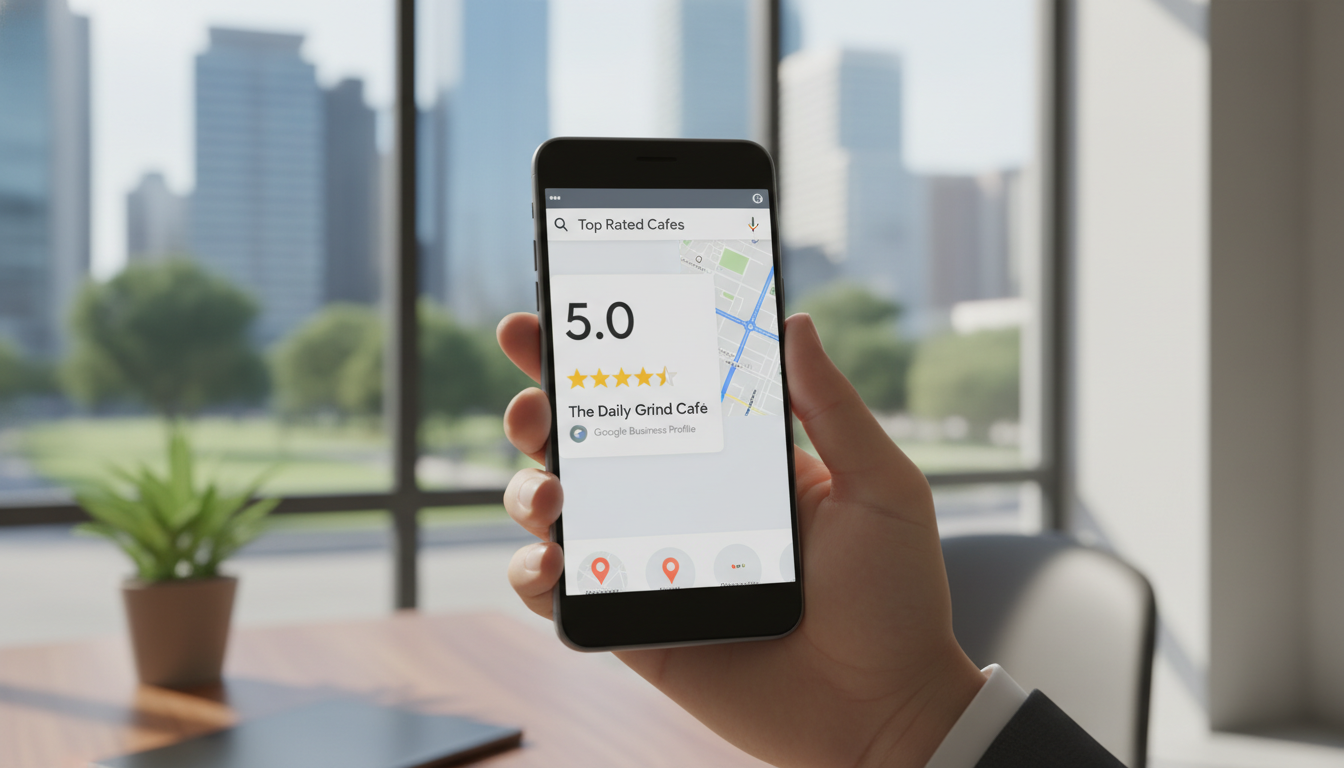
Furthermore, you must utilize the Google Posts feature to share updates, offers, and recent blog posts directly on the search results page. Treat your Google Business Profile with the exact same reverence you treat your actual website. Keeping your hours, services, and contact information flawlessly updated is the easiest way to drive immediate foot traffic and phone calls.
Allowing inconsistent NAP data across directories
NAP stands for Name, Address, and Phone number. In the world of local SEO, consistency is synonymous with trust. Search engines constantly scrape thousands of business directories, social media platforms, and review sites to verify your identity. If your business is listed as “Main St. Plumbing” on Yelp, but “Main Street Plumbers LLC” on Facebook, and features two entirely different phone numbers, you are creating massive digital confusion.
Inconsistent citations severely erode search engine trust. If Google cannot confidently verify exactly where your business is located and how to contact you, they will absolutely refuse to display your profile in the local map pack. They will not risk sending their users to a wrong address or a disconnected phone line.
You must conduct a comprehensive citation audit utilizing local SEO software. Hunt down every single instance of your business information across the internet and standardize it perfectly. Every comma, suite number, and area code must be identical everywhere online. This unified digital footprint provides the concrete verification algorithms need to rank you locally.
Ignoring the power of customer reviews
Social proof is no longer just a conversion optimization tactic; it is a foundational algorithmic ranking factor. A staggering number of local businesses completely ignore their online reviews, leaving their reputation entirely to chance. If your competitor has two hundred glowing, five-star reviews and you only have three, the search engine will inherently prioritize the trusted competitor, regardless of your on-page SEO.
High review volume, consistent velocity, and overwhelmingly positive sentiment heavily influence local visibility. You must build a systematic, automated process for actively soliciting reviews from your satisfied customers immediately after a transaction or service. Do not be afraid to ask; most happy clients are more than willing to vouch for your excellence.
Equally important is how you manage those reviews. You must publicly respond to every single review, both positive and negative. Thank your advocates and professionally, empathetically address any complaints. This public engagement proves to both potential customers and search engines that you are an active, transparent, and customer-centric organization.
The Set It And Forget It Content Strategy Fallacy
Letting your best content rot away
The “publish and pray” mentality is a phenomenal way to watch your organic traffic slowly bleed out over time. Many marketers spend dozens of hours writing an incredible cornerstone guide, achieve a page one ranking, and then never look at the article again. Unfortunately, information evolves, statistics become outdated, and hungry competitors are constantly publishing newer, deeper variations of your exact topic.
This phenomenon is known as content decay. Search engines prioritize “freshness” as a critical ranking signal for a vast majority of queries. If your definitive guide to industry trends has not been updated in four years, Google knows it is no longer the most relevant answer. You will slowly but surely be pushed down the rankings by fresher, recently updated content.
To combat content rot, you must implement a rigorous quarterly refresh schedule. Identify pages that are slowly losing traffic and surgically update them. Add new statistics, address recent industry changes, rewrite the introduction to make it punchier, and hit publish again. Maintaining your existing rankings through regular updates is frequently far more profitable than constantly churning out entirely new articles.
Sticking exclusively to massive walls of text
Human attention spans are entirely fractured. If a user clicks on your link and is immediately confronted with a relentless, five-thousand-word wall of unbroken text, they will experience profound cognitive overload and bounce immediately. Text alone is rarely enough to fully satisfy the modern consumer’s desire for dynamic, engaging education.
You must aggressively diversify your content formats. Break up long paragraphs with custom illustrations, embedded videos, interactive calculators, and highly scannable bullet points. Visual elements act as speed bumps, forcing the user to slow down their scrolling and actually digest the material. This directly increases dwell time, which is a massive indicator of content quality.
Different formats address different learning styles and stages of the buyer journey. Some users want to skim a quick infographic, while others want to watch a detailed tutorial video. By providing multiple avenues of consumption on a single page, you dramatically increase the likelihood of retaining the visitor and earning a powerful backlink from another site looking to reference your multimedia assets.
Misaligning with rapidly evolving search intent
Search intent is not static; it is incredibly dynamic and can shift overnight. A keyword that primarily returned educational blog posts last year might suddenly return e-commerce product pages today if Google notices a shift in user behavior. If you stubbornly refuse to adapt your content format to match what Google currently prefers, your rankings will inevitably plummet.
You must constantly audit the top-ranking competitors for your primary keywords. What exactly is Google rewarding right now? Is the search engine displaying listicles, deeply technical whitepapers, or video carousels? If the entire first page is comprised of software tools and you are trying to rank a traditional blog post, you are fighting a losing battle against the algorithm’s current understanding of intent.
Staying aligned with search intent requires agility and humility. You must be willing to completely tear down and rebuild a piece of content if the landscape shifts. SEO is a game of interpretation; whoever best interprets and delivers what the user secretly desires will ultimately win the top position.
Flying Blind Without Analytics Or Monitoring
Ignoring Google Search Console warnings
Attempting to do SEO without obsessively monitoring Google Search Console is like trying to fly a commercial airliner completely blindfolded. It is the only direct line of communication between you and the actual search engine. If you are ignoring the platform, you are missing critical diagnostics regarding crawl errors, indexing failures, and catastrophic manual action penalties.
GSC will specifically tell you if your pages are not being indexed because of a “noindex” tag you accidentally left in the code. It will warn you if your site is too slow on mobile devices or if your structured data is completely broken. These are not mere suggestions; they are explicit instructions from Google on how to fix your website.
You must make checking Google Search Console a mandatory weekly habit. Treat it as your website’s primary health diagnostic tool. Investigate every single error report, monitor your impression data for sudden drops, and proactively fix technical issues before they have a chance to negatively impact your organic traffic.
Tracking the wrong performance metrics
The SEO industry is notoriously obsessed with metrics that look fantastic on a spreadsheet but have absolutely zero correlation with business growth. If you are celebrating a massive spike in raw pageviews generated from an irrelevant viral blog post in a foreign country, you are completely missing the point. Traffic without conversion is just a vanity metric.
This widespread delusion is exactly why your seo metrics are lying to you about business growth. You must stop tracking meaningless hits and start tracking highly qualified leads, booked appointments, and actual e-commerce revenue. An SEO strategy that brings in one hundred highly targeted visitors who convert at twenty percent is infinitely superior to a strategy that brings in ten thousand users who instantly bounce.

You must configure your analytics platforms to strictly monitor conversion events. Measure the actual ROI and bottom-line impact of your SEO corrections using robust tools like Ahrefs and Semrush to track keyword movements, but tie those movements directly to your CRM data. When you focus on revenue rather than raw traffic, your entire digital marketing strategy becomes substantially sharper and significantly more profitable.
Failing to adapt to algorithm updates
Google pushes thousands of minor algorithm updates every single year, alongside several massive core updates that can completely rewrite the rules of digital visibility overnight. What worked perfectly and generated millions of dollars last year might actively penalize your site today. SEO is not a finite project you can complete and check off a list; it is a relentless, ongoing battle for relevance.
If you build your entire strategy around exploiting a temporary loophole or a manipulative link-building tactic, an algorithm update will inevitably destroy your business model. The only way to survive the turbulence of algorithmic shifts is to deeply commit to publishing wildly valuable content, securing technical perfection, and earning genuine authority.
Continuous monitoring and swift adaptation are absolutely non-negotiable for long-term survival. You must stay plugged into industry news, monitor the volatility of search results, and be completely willing to pivot your strategy when the rules change. In the brutal arena of search engine optimization, the businesses that refuse to adapt are the ones that disappear.
Frequently Asked Questions About SEO Mistakes
How long does it take to recover from an SEO penalty?
Recovery time is rarely a straightforward answer; it varies wildly based on the specific severity of the infraction and your speed of correction. If you were hit by an algorithmic demotion like a Core Update due to thin content, recovery can take several months. You must systematically rewrite and improve the content, then wait for Google to naturally crawl, reassess, and recalculate your site’s quality over time. Conversely, if you received a manual action for a toxic backlink profile, you must file a reconsideration request after utilizing the disavow tool. Once a Google employee reviews and approves your earnest cleanup efforts, rankings can sometimes rebound within a few weeks, though trust takes much longer to fully rebuild.
Is keyword stuffing still a relevant threat today?
Yes, it is absolutely still a relevant threat, but the way search engines penalize it has evolved dramatically. In the past, keyword stuffing might simply be ignored; today, modern natural language processing easily detects and actively penalizes unnatural keyword insertion. The Helpful Content Update specifically targets writing that feels machine-generated or explicitly manipulative. If you are awkwardly forcing exact-match phrases into every heading and paragraph just to manipulate density, Google will view your content as a highly degraded user experience and demote the entire domain as spam.
What tools help identify these critical SEO errors?
The foundation of any error identification strategy must absolutely start with Google Search Console, as it provides unfiltered data directly from the search engine regarding indexing blocks, mobile usability, and security issues. Beyond that, premium third-party software suites like Ahrefs and Semrush are indispensable. These platforms run comprehensive site audits that spider your entire architecture, instantly flagging broken links, toxic backlink anomalies, duplicate metadata, and severe site speed issues. Utilizing a combination of first-party and third-party tools is the only way to maintain a complete diagnostic overview of your website’s health.
How do I identify and fix duplicate content?
Identifying duplicate content requires running a deep site crawl using software like Screaming Frog or the auditing features within premium SEO platforms. These tools will highlight pages with identical title tags, meta descriptions, or heavily overlapping body copy. Once identified, you have three primary methods to fix the issue. First, if the pages serve no unique purpose, permanently 301 redirect the duplicate URLs to the single strongest version. Second, if both pages must exist for user experience (like a printable version of an article), utilize a canonical tag to tell search engines which URL is the “master” copy to index. Finally, you can simply rewrite the shallow pages to provide entirely unique, deeply comprehensive value.
Book a free consultation for your practice today.